
Things to Remember About Railroad Crossings
Every year, collisions between vehicles and trains at railroad crossings lead to tragic accidents, often resulting in severe injuries or fatalities. Many of these incidents are preventable with proper awareness.
There are some crucial things about trains and railroad crossings that you should remember and questions you should expect on your written knowledge test:
Understanding the Risks
Trains are massive and fast-moving, making it impossible for them to stop quickly. When a train collides with a vehicle, the consequences are often catastrophic.
Yield to Trains
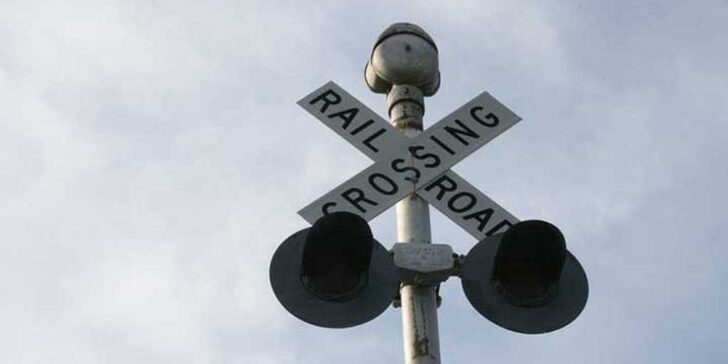
Always yield to trains: The crossbuck sign at crossings means yield. You must always yield to trains.
Look and listen: Stay alert when approaching a crossing. Turn off radios, cell phones, and other distractions that may prevent you from hearing an approaching train.
Always expect a train: Freight trains don’t run at fixed times, and schedules for passenger trains change. Be prepared for trains at any time.
Never race a train: Trying to beat a train is incredibly dangerous. A train is usually closer and faster-moving than you think. Never race a train to the crossing – even if you tie, you lose.
Obey Signs and Signals
Many crossings have flashing signals, bells, and gates. Rural crossings can have yield or stop signs instead of signals.
Obey the Signals: Pay close attention to all railroad signals and signs. A flashing red light means a train is approaching, and you must stop. If a signal malfunctions, look for a 1-800 number posted on or near the crossing signal or call 911.
Never drive around lowered gates: It is illegal to drive around a closed gate. Wait until the gate is up and signals stop flashing before you move across tracks.
Stopping at Crossings
Stop at a safe distance: When a train approaches, stop at least 15 feet from the tracks. The train is three feet wider than the tracks on both sides. When parking close to tracks, you must keep a distance of 50 feet.
Look for a second train. When a train has passed a multiple-track crossing, you should watch for a second train on the other tracks approaching from either direction.
Never stop on the tracks: Always ensure room on the other side and clear the crossing without stopping.
Get out of a stuck vehicle: If your car gets stuck on the tracks, immediately get out and move away from the tracks. Call 911 or the emergency number posted at the crossing.

Some Vehicles will Always Stop
Some vehicles approaching crossings will always stop before moving on.
These vehicles include school buses and those transporting hazardous goods.
If you are following those vehicles, slow down and prepare to stop behind the vehicle. Don’t try to pass.
Conclusion
Every driver has a role to play in preventing accidents at railroad crossings. By following these reminders, you can help ensure your safety and the safety of others. Remember, no destination is so important that it’s worth risking a collision with a train. Stay alert, stay safe, and respect the tracks.


DMV Questions and Answers by State
| Alabama |
| Alaska |
| Arizona |
| Arkansas |
| California |
| Colorado |
| Connecticut |
| Delaware |
| District of Columbia |
| Florida |
| Georgia |
| Hawaii |
| Idaho |
| Illinois |
| Indiana |
| Iowa |
| Kansas |

