
Nebraska Knowledge Exam – Driver’s License Written Test – 2026
Results
Great job. This is a passing score. Do you want to try again?
This is not a passing score. Do you want to try again?


#1. If your wheels drop off the roadway or pavement edge, you should:
If you run off the road, do not panic.
- Hold steering wheel firmly and steer so wheels straddle the edge of the roadway.
- Do not attempt to turn back onto the roadway immediately.
- Reduce speed.
- Check traffic.
- Gradually turn back onto roadway when it is safe to do so staying in the driving lane.

#2. Your lane ends ahead, and there is a large truck in the lane beside you. What is the best thing to do?
One of the biggest mistakes you can make is to cut in too soon and slow down after passing a big truck. Because of their size and weight, trucks need a much greater distance to stop than cars. If you do not give them enough space, you run the risk of being hit from behind. Do not pull in front of the truck or bus unless the entire front of the truck or bus can be seen in the rear-view mirror.

#3. It is a good idea to use your high-beam headlights in the following situations except:
Remember, you should not use your high-beam headlights in fog.
This question asked when you should not use your high-beam headlights.

#4. A center lane with a solid yellow line and a broken yellow line on both sides:
A center lane separated with solid and broken yellow lines reserves a lane for left turns shared with traffic from the opposite direction.
Motorists entering this lane should use caution and may only turn left. Using this lane to pass is prohibited.
Signs and arrow markings on the pavement will assist drivers in recognizing this useful turning lane.
Note: curved arrows pointing in different directions do NOT indicate that the lane should be used for right turns, they indicate left turns from opposite directions.

#5. From left to right, traffic lights are:
The correct order is: red, yellow, green.

#6. When making a left turn into a two-way street with multiple lanes, it is generally wrong to:
When making a left turn, do not turn from or enter the right-hand lane. If a center lane is not marked, a left turn shall be made from the left lane lawfully available and the left turn shall be made into the left lane that is lawfully available.
If there are signs or lane markings that allow for two or more turning lanes, stay in your lane during the turn.
This question asked what is wrong to do.
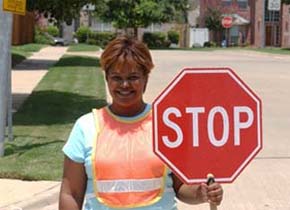
#7. You must obey signals and directions from school crossing guards:
You must obey their directions at all times.

#8. A five-sided sign means:
The pentagon (five-sided) shape warns you of school zones and marks school crossings.

#9. The wrong way sign means:
The wrong way sign supplements the Do not Enter sign. It is placed along the exit ramp or the one-way roadway farther from the crossroad. It tells you that the road is closed to traffic going in your direction and you are driving in the wrong direction. When safe, back out or turn around and return to the road you were on.

#10. Nebraska law requires that individuals who change their name or address shall apply to the county license examiner for a replacement operator's license within ___ days.
If your name or address changes, you must apply for a replacement license or ID card within 60 days of such change.

#11. What is the best advice for a driver who has been drinking alcohol?
If you plan to consume alcohol beverages, always make arrangements for a designated driver or alternative transportation.
A person who has been drinking should not drive. Things like coffee, fresh air, exercise, or cold showers will not help. Only time can reduce the alcohol level and the effects from the body.

#12. When you park headed uphill and there is a curb, you should turn your front wheels:
Headed uphill, turn your front wheels away from the curb (toward the travel lane) and let your vehicle roll back a few inches. The curb will stop the car from rolling anywhere.
Remember, when you park on a hill, the general rule is to turn your wheels sharply toward the side of the road or curb. This way, if your vehicle starts to roll downhill, it will roll away from traffic. However, when headed uphill at a curb, you should turn the front wheels in the opposite direction, away from the curb and towards the road.

#13. When you see a sign with this shape and color, you must:
Stop signs are always octagonal (8-sided). A stop sign means that you must bring your vehicle to a complete halt at the marked stop line. If there is no marked stop line, stop before entering the crosswalk on the near side of the intersection. If there is no crosswalk, stop at a point nearest the intersecting roadway where you have a clear view of approaching traffic on the intersecting roadway before entering the intersection.

#14. The driver ahead signals:
Right turn – left arm extended, with elbow bent upward, at about a 90-degree angle.

#15. Which of the following may be a symptom of fatigue?
Know the signs of driving fatigue, like: drifting in your lane, repeated yawning, difficulty focusing, tailgating, or missing road signs.

#16. What do the light gray areas in the picture mark?
Your blind spot is the area to the side of a vehicle which cannot be seen in mirrors. A blind spot exist on both sides of your vehicle. When changing lanes or making a turn, glance over your shoulder to be sure no one is in the blind spot.

#17. Some drivers must always stop before they cross train tracks. What vehicles are not required to stop?
Watch for vehicles that must stop at railroad crossings, such as buses and trucks carrying hazardous materials.
Remember, if you are following this type of vehicle you should slow down and be prepared to stop. Do not pass another vehicle at a railroad crossing.

#18. After passing another vehicle and before returning to the proper lane, it is best to:
Signal and move back into the right lane when the front of the vehicle being passed, or the headlights are seen in the rear-view mirror. Do not return to the right lane too soon.
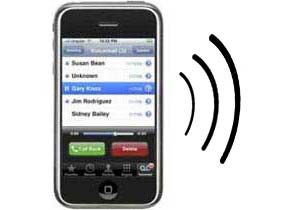
#19. You are on an interstate when your cell phone rings. Which of the following is the best thing to do?
Driving is a skill that requires your full attention to safely control your vehicle and respond to events happening on the roads around you. Events or things that prevent you from operating your car safely are distractions.
Drivers who use handheld cell phones are 4 times more likely to get into crashes serious enough to injure themselves. Some drivers are using hands free cell phones which do not reduce the distraction.
Activate your voicemail feature or pull off the road and stop before using your phone.

#20. This sign marks:
Low clearance. The overpass has a low clearance. Do not proceed if the vehicle height exceeds the dimensions indicated.

#21. Which of the following is the best method to improve safety when driving at night?
Always reduce your speed when it is difficult to see clearly down the road. Speed should be adjusted to safely stop within the area illuminated by the headlights.

#22. If you see a deer crossing the road, you should:
Deer are unpredictable and travel in groups, so watch for more than one and always buckle up.
Animals tend to fixate on headlights, so flashing them may cause the animal to freeze in the road.

#23. Pedestrians must be given the right of way when in crosswalks even if the driver has the green light.
You must yield to pedestrians in a crosswalk, even if you have a green light.

#24. On which side should you pass a vertical panel like this?
If the orange stripes slant down to the right, go to the right. If the stripes slant to the left, go to the left.

#25. If it is raining when you approach this sign, you should:
Slippery when wet. In wet weather, drive slowly. Do not speed up or brake quickly. Make sharp turns at a slow speed.
| This Nebraska License Sample Test | |
|---|---|
| Questions on each practice test: | 25 |
| Question pool: | 750+ |
| Random questions | |
Facts about Your Nebraska DMV Written Test
| Nebraska Written Knowledge Test for a Permit or Driver’s License | |
|---|---|
| Number of questions on exam: | 25 questions |
| Passing score: | 80 percent |
| Correct answers to pass: | 20 |
| Allotted time to complete test: | No limit |
| Wait time before retest: | 1 day |
The Purpose of the Online Nebraska Practice Test
We have designed these practice tests to help you study and ultimately pass the written knowledge exam for a Nebraska permit or driver’s license.
Each test is random. Our system draws questions from a larger pool, similar to how DMV creates the official written test. Each test is slightly different from the previous one.
You can take the Nebraska practice tests as often as you like. The tests will help you to get comfortable with everything you need to learn for the written examination.
The practice tests are a learning tool. Use them after reading and studying the Nebraska Driver’s Manual, not as an alternative to studying the manual. You need both.

Nebraska Driver’s Manual
Make sure you get the latest version of the official Nebraska Driver’s Manual. Your driving school typically provides the manual as part of your driver’s education. You can also get a copy from any DMV office or download a copy online from dmv.nebraska.gov.
Nebraska DMV draws all questions on your written exam from this manual’s information. Please read it carefully. Understanding Nebraska traffic laws, rules of the road, and other information in the manual is an essential first step toward successfully passing the exam.
How to Use the Nebraska Practice Test
After reading the manual, take a few practice tests to check how much you have learned.
You will get instant feedback after each practice question. Should you make a mistake, there is also a brief explanation to help you understand the correct answer. Use the manual for more information if you need clarification on the right answers. Being active during a study session is a proven way of learning faster.
At the end of the practice test, you will see your score. Your score is a rough indication of your level of readiness.
You need 20 correct answers to pass your official written test. When practicing for the exam, practice you should only be satisfied once you reach a score of 100%.
Reading questions and choices twice is a good idea, even if it is just a practice test. The most common mistake on the exam is rushing through the test without carefully reading questions and answers.
You are not in a hurry!
Using the Nebraska practice tests to learn how to pace yourself during a test is a good idea. You have plenty of time to complete your written DMV exam.

It also helps to discuss standard rules and safe driving practices with a friend, teacher, parent, or licensed driver. Being active improves learning. The more you know, the easier it will be to pass the examination.
Is the Written Nebraska Examination Hard?
The Nebraska written test is known to be complicated. More than 32 percent of all first-time applicants fail the Nebraska written test. So, you should prepare well.
The true-and-false questions in the manual are not a good representation of the actual exam.
Read more about How to Ace the DMV Test.
Who Must Take the Written Test?
There is a separate written test for each class of license. You can find more information about different tests in the driver’s manual.
First-time applicant
As a first-time applicant, you must always take and pass a written knowledge test.
- Learner’s Permit – Type LPE: must pass vision and written tests.
- Learner’s Permit – Type LPD: must pass vision and written tests. DMV will waive the written test if a school learner’s permit (LPE), school permit (SCP), or learner’s permit (LPD) is valid or has not expired for more than one year.
- School Permit – Type SCP: waived if the applicant has completed a DMV-approved driver safety course.
- Provisional Operator’s Permit – POP: DMV waives the test if the applicant has completed a DMV-approved driver safety course.
- Operator’s License (Class O): waived if the applicant held a POP.
Drivers with an expired out-of-state license
If you have an expired out-of-state driver’s license, you must also take the test before you can get a Nebraska license.
Drivers with a Nebraska license expired more than one year
DMV will waive the written test when you renew a valid Nebraska operator’s license. If you let your license expire for over 12 months, you must take the written test again.
Drivers with a revoked license
After a revocation, you must apply for a new license and retake all tests.
Drivers with a foreign driver’s license
Drivers who move to Nebraska and hold a license from a foreign country other than Canada, Germany, or Mexico must pass all tests before DMV issues a Nebraska driver’s license.

What You Must Know about the Exam
The official test has 25 multiple-choice and true-or-false questions. The passing score is 80%. You must be aware that there can be questions with more than one correct answer, which is the case when you see “All of the above” as the last choice. Ensure you read everything before answering.
The Nebraska written test is a closed-book test. You cannot use your driver’s manual or other books during the examination. Any electronic device, such as your cell phone, is also banned.
If you cheat on the examination, the examiner will end and postpone your exam.
The Nebraska written test has no time limit. You can take as much time as you need to complete the test. Typically, you will finish in less than 15 minutes.
Should you fail your exam, you must retake it on a different day.
You typically take the test as part of your driver’s education, but you can also take the test at a DMV office.
Nebraska DMV does not offer online testing from home.
Nebraska Graduated Licensing Laws

If you are between 14 and 16 years, you can apply for a School Learner’s Permit (LPE). This permit allows a student to legally practice driving for a School Permit (SCP). The School Permit can be issued if you live outside a city of 5,000 or more or attend a school outside a town of 5,000 or more. With a school permit, you can drive unsupervised to and from your school.
The other route to your full driver’s license starts with a standard Learner’s Permit (Type LPD). You must be at least 15 years to apply for the LPD.
The Learner’s Permit allows you to practice driving for a Provisional Operator’s Permit (POP), Operator’s (Class O), or Motorcycle (Class M) License.
A Provisional Operator’s Permit (POP) is the intermediate step between your first learner’s permit and a full unrestricted driver’s license. You must be at least 16 years before DMV issues the provisional permit, and you must have held an LPE, LPD, or SCP for at least six months.


