
10 Things You Should Know about Driving in Rain | DMV Answers

Driving in Rain Increases the Risk of an Accident
Rain and wet roads make it harder to keep traction. It takes longer to stop when the road is wet. Hard braking and turning can cause your car to skid.
Heavy rain, fog, and water spray can also make it more difficult to see.
Driving in the rain contributes to more than a million accidents every year. Therefore, you should study the following tips very carefully. Some of them will show up as questions on your permit test. They will also help to keep you safe on the road once you have your driver’s license.

1.
Slow Down on Slippery Roads
Slow down as soon as the rain starts. Don’t wait until the rain pours down.
Roads are often most slippery when rain first mixes with road dirt and oil, forming a greasy film, even more so in warm weather.
In the fall, you should watch for spots with wet leaves.
In winter, be extra careful when you approach bridges and overpasses. Shady spots, bridges, and overpasses may freeze before the rest of the road does.
2.
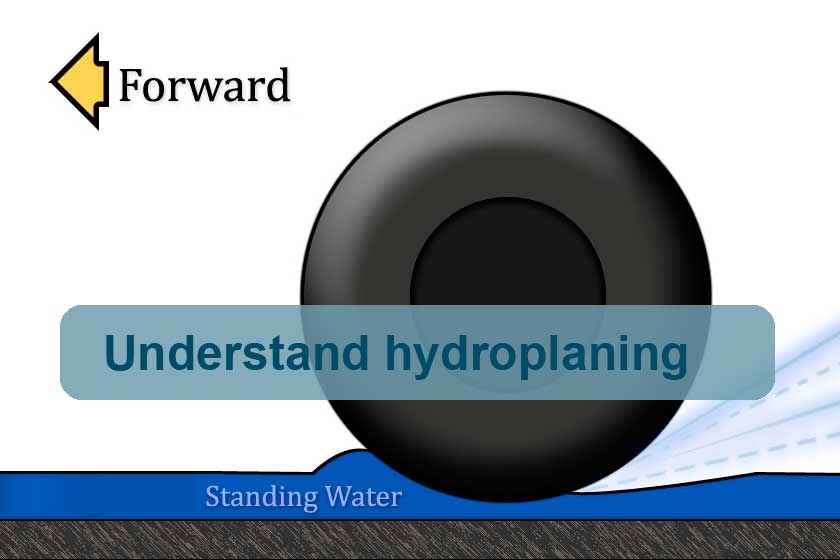
Understand Hydroplaning and Know What to Do
Hydroplaning means your tires ride on water like water skis and have no contact with the road. Drivers cause hydroplaning by driving too fast for road conditions.
If your vehicle starts to hydroplane, don’t blame the conditions; you were driving too fast.
When there is water on the road, your tires can lose all contact with the road at 50 mph. Under-inflated, worn, or bald tires lose contact with the road at much lower speeds.
It can be scary when your tires lose contact with the road. Whatever you do, don’t overreact. It is best to keep calm and slowly step off the gas pedal.
Never hit the brakes or turn suddenly. On a slippery road, you are likely to lose control and skid.

3.
Turn off Cruise Control and Avoid Distractions
Don’t use cruise control when driving on wet roads. Your car is harder to control, and you need to maintain as much control as possible on a slippery surface.
Avoid driver distractions that could cause you to take your eyes off the road or your attention off the driving task. You should always be aware of what is happening around your vehicle.
4.
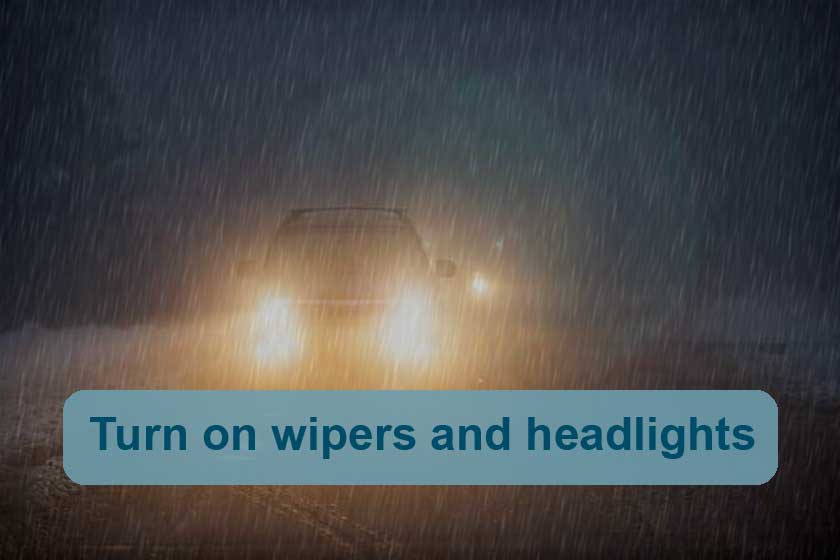
Turn on Windshield Wipers
Rain on the windshield reduces your visibility. Always keep your windshield wipers in good condition and use them whenever it starts to rain.
5.
Turn on Headlights
When driving in the rain, headlights help you to see the road ahead and help others to see you. Turning on headlights in the rain helps you stay safe. Even if you don’t think it is necessary to use headlights, turn them on as a courtesy to other drivers.
State law requires you to use headlights whenever you can’t clearly see the road ahead. The law may also require you to use headlights when you turn on your wipers.
You should always use your low beam headlights in rain. Don’t turn on your high beams. The light from high beams can reflect from the rain and make it harder to see.

6.
Increase Your Following Distance
As you slow down, you should also make more space between your vehicle and the one in front.
Your car takes longer to stop on a wet road, so you need more space to stop safely. Many accidents happen on slippery roads, so be prepared to stop suddenly and within the distance you can see ahead.
7.
Avoid Large Puddles
Don’t drive through large puddles.
If you drive through a large puddle, it can cause your brakes to become wet. Wet brakes may not work correctly.
Should your brakes become wet, apply them lightly to dry them until you feel them working normally again.
Large puddles may also be deeper than you think and can hide potholes.
8.
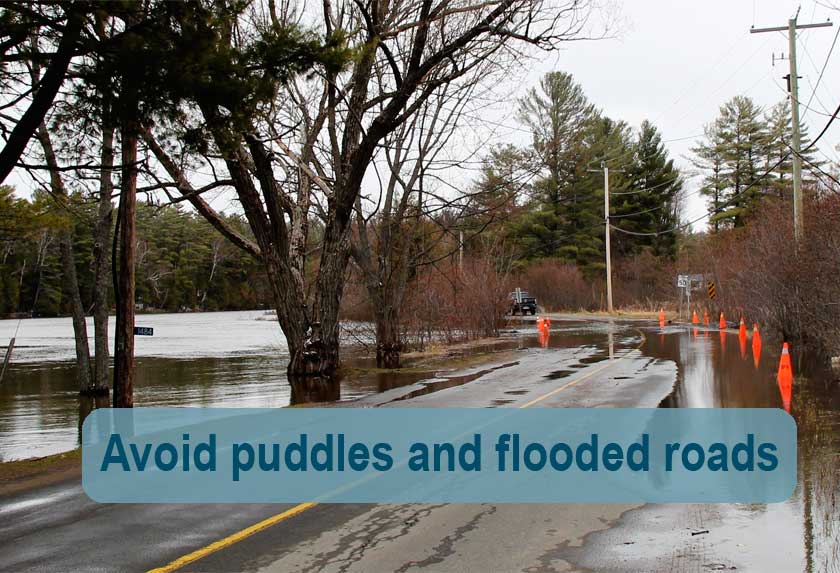
Don’t Drive into a Flooded Road
Don’t drive into a flooded road or cross-flooded washes. Water can stall your engine, hide potholes, and damaged road surfaces. Flash floods can carry your vehicle off the road. 2 feet of rushing water can carry away most vehicles.
If you see a flooded roadway ahead, turn around and find another route to your destination. You may be charged for emergency response expenses if responders must remove your vehicle from a flooded road.
If your car stalls in deep water, leave it immediately and seek higher ground.
9.
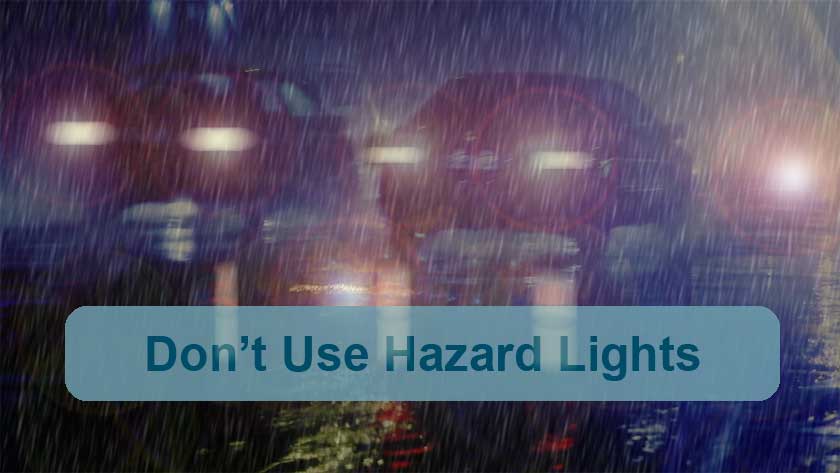
Don’t Drive with Emergency Flashers Turned on
In some states, it is a widespread misunderstanding that you should turn on emergency flashers whenever you encounter heavy rain.
It would be best if you primarily used emergency flashers when you have stopped because of an emergency and where it may be hard for other drivers to see you. Always use them if you have stopped nearby travel lanes.
Driving with emergency flashers on is illegal in several states – regardless of your reason for using them. But more importantly, other drivers may not expect to see hazard lights on a moving car and may mistake you for a stationary vehicle. Hazard lights also reduce your ability to use turn signals as usual.
Even if the law in your state allows driving with hazard lights on, you should avoid this habit as much as possible. In hazardous weather conditions, turning off the road and waiting until conditions improve is better.
Read more about when to use hazard lights.
10.
Prepare for Bad Weather
Your tires are the only point of contact between your car and the road. They play an essential role when driving in the rain. Check tire pressure regularly and always when tires are cold. Hot tires may show inaccurate readings.
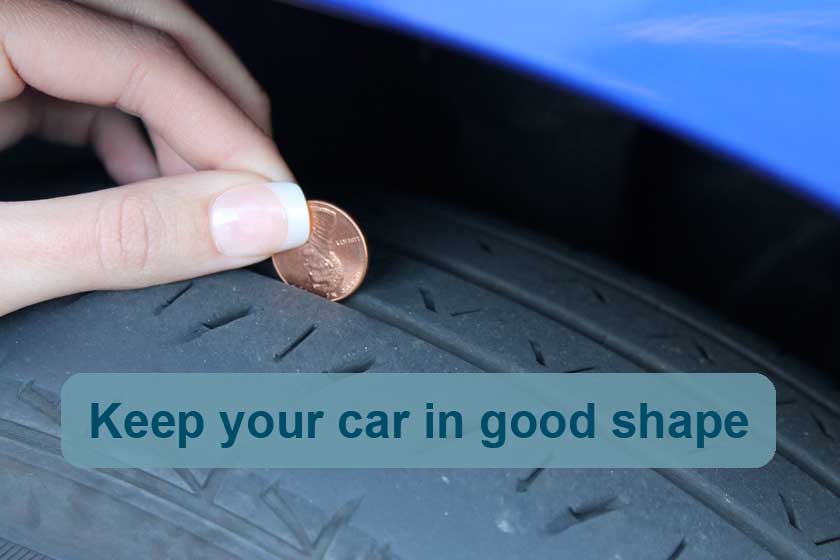
Check the sidewalls of the tires for cracks or unusual bulges. Use a simple penny test to ensure all tires have a minimum tread depth of 2/32 inches. To perform well on wet roads, consider replacing your tires when they reach approximately 4/32 of an inch. (Read more about Safe Tread Depth.)
Check your headlights, brake lights, and turn signals regularly. Keep all lights clear of dirt.
Keep the glass of windows and windshields clean inside and out. Mirrors must also be clean and properly adjusted.
Change your windshield wipers if they streak or fail to clear your windshield correctly.
When driving in the rain, you should also allow more time to get to your destination.

Review Questions
Question 1: When are road surfaces usually most slippery during rainfall?
- A) When it has been raining for more than an hour
- B) When it first starts to rain
- C) When it stops to rain
ANSWER: B. Many roads are most slippery when it first starts to rain. Rain mixes with road dirt and oil and forms a greasy film. When driving in the rain, your tires can lose traction, and your car can hydroplane.
Question 2: In cold and wet weather, the roadways on bridges and overpasses:
- A) Do not freeze because they are made of concrete
- B) Freeze after the rest of the road does
- C) Freeze before the rest of the road does
ANSWER: C. Bridges and highway overpasses freeze before the rest of the road because the ground does not insulate them.
Question 3: When driving in the rain, you should turn on:
- A) Wipers and low beam headlights
- B) Wipers and high beam headlights
- C) Wipers and hazard lights
ANSWER: A. Turn on wipers and low beam headlights. Do not use high-beam headlights or hazard lights.
Question 4: If you see a flooded roadway ahead, you should:
- A) Find an alternate route
- B) Stop and immediately abandon your car
- C) Grip the steering wheel firmly and keep your speed
ANSWER: A. If you see a flooded roadway ahead, turn around and find another route to your destination.
Question 5: What is the main reason for increasing your following distance when driving in the rain?
- A) Rain on the windshield reduces your visibility
- B) Light from high beams can reflect from the rain
- C) The stopping distance of your car is longer
ANSWER: C. Your car is more challenging to stop on wet pavement.
DMV Test Questions for Your State
| Alabama |
| Alaska |
| Arizona |
| Arkansas |
| California |
| Colorado |
| Connecticut |
| Delaware |
| District of Columbia |
| Florida |
| Georgia |
| Hawaii |
| Idaho |
| Illinois |
| Indiana |
| Iowa |
| Kansas |


excellent advice!
Thank you!
I have driven for 69 years, done over 1,000,000 miles and never had an at fault accident. Secret, concentrate on your driving. Know where all the other vehicles are at all times. No radio, no conversation, total concentration.at all times.