Why Laws Prohibit Parking in Front of Driveways, Even Your Own
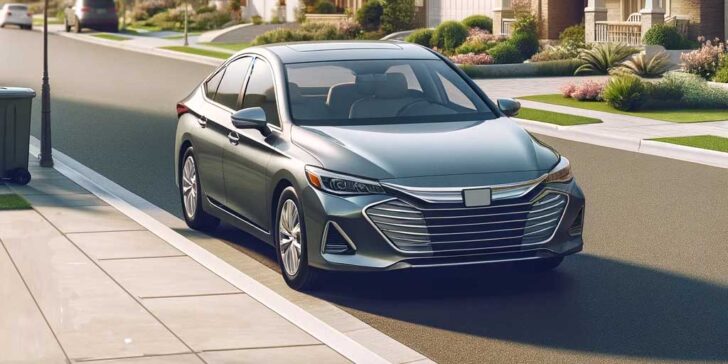
Parking in Front of Driveways
In many states across the U.S., it’s illegal to park in front of a driveway, including your own.
Such a law often upsets homeowners.
Like Richard who wrote this:
“I am absolutely livid! Just received a ridiculous parking ticket for parking in front of MY OWN driveway! This is beyond absurd. It’s my property, and if I decide to park my car in front of my own house, that should be my right. It’s not like I’m blocking anyone else’s access. The city needs to reevaluate these nonsensical rules and stop penalizing homeowners for using their own space. This is an outright steal, and it’s completely unfair. We need to stand up against such overreaching regulations that make no sense.”
Why Can’t You Block Access to Your Property?
The reasoning behind the law is rooted in broader public safety concerns, accessibility issues, and the principle of maintaining clear public roadways.
Public Safety and Accessibility
One of the primary reasons for the parking rule is to ensure emergency vehicles have unimpeded access. In an emergency, every second counts. A vehicle parked in front of a driveway could, in worst cases, delay first responders, like fire trucks, ambulances, or police cars, from reaching their destination in time.
Parked cars blocking driveways can create blind spots for pedestrians, especially children, increasing the risk of accidents. It is mainly a problem in neighborhoods with schools and parks.
Vehicles parked in front of driveways may also disrupt traffic flow, especially in narrow streets. It can force other drivers to swerve onto the wrong side of the street, leading to traffic disturbances or even collisions.
Legal and Practical Considerations
Even if it’s your driveway and you don’t block anyone from entering it, it’s impractical for law enforcement to determine if a vehicle blocking a driveway belongs to the property owner. To avoid this ambiguity, the law applies to everyone.
Richard (above) also forgets that the area in front of a driveway is considered part of the public roadway, not private property. While the driveway belongs to the homeowner, the space in front of it is under the jurisdiction of public road ordinances.
A law prohibiting parking in front of driveways also encourages good neighbor relations. It ensures that everyone’s access to their property is respected and maintained.

Local Flexibility
While the state law prohibits parking in front of driveways, local regulations may offer certain flexibility. For example, homeowners may park in front of their driveways if the vehicle does not protrude onto the sidewalk or street or if they have a special permit. However, these are exceptions and not the norm.
The norm or the typical law says something like this:
“An occupied or unoccupied vehicle may not be stood or parked by the operator, other than briefly to pick up or discharge a passenger … in front of a driveway, either public or private.”
(Texas )
Summary
The prohibition of parking in front of any driveway, including one’s own, is rooted in considerations for public safety, accessibility, and the efficient use of public roadways.
For your DMV test, it is essential to understand that the parking laws prohibit blocking a sidewalk or a driveway.

DMV Questions and Answers by State
| Alabama |
| Alaska |
| Arizona |
| Arkansas |
| California |
| Colorado |
| Connecticut |
| Delaware |
| District of Columbia |
| Florida |
| Georgia |
| Hawaii |
| Idaho |
| Illinois |
| Indiana |
| Iowa |
| Kansas |