
Who Has the Right of Way at Intersections?
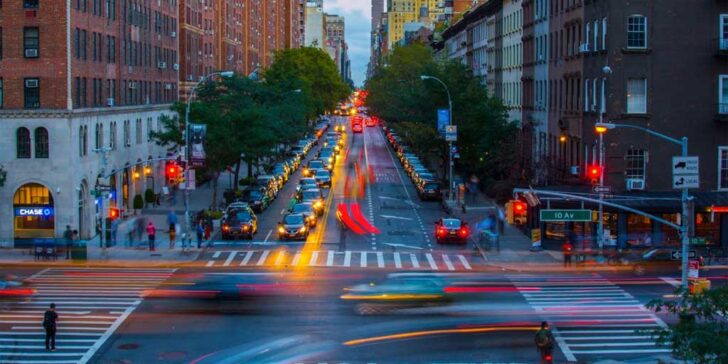
Where Accidents Happen
First, an important takeaway for your DMV test: Intersections are among the most common locations for traffic accidents.
You may see a question about that on your DMV test. So you should know that far more accidents happen in urban areas close to home than on freeways and high-speed highways.
Understanding Right-of-way Rules
Accidents at intersections are often caused by confusion over who has the right of way. Understanding right-of-way rules helps ensure smoother traffic flow and prevents dangerous collisions.
In the United States, right-of-way laws vary slightly by state, but there are general guidelines that all drivers should follow.
What are he Right-of-way rules?
Right-of-way refers to the legal right of a vehicle or pedestrian to proceed first in a traffic situation. It is important to note that no driver is automatically entitled to the right of way; instead, laws dictate who must yield..
If you see a question about “Who has the right of way at intersections?” The answer may very well be “No one.”
Failing to yield when required can result in accidents, fines, and legal liability.
Right-of-Way Rules at Different Types of Intersections
1. Uncontrolled Intersections (No Traffic Signals or Signs)
At intersections without traffic control devices, the general rules are:
- The driver on the left must yield to the driver on the right.
- If two vehicles arrive at the intersection at the same time, the vehicle on the right has the right of way.
- If the intersection is a four-way, vehicles should proceed in the order of arrival. If in doubt, making eye contact with other drivers can help clarify intentions.
2. Stop Signs and Yield Signs

- At a four-way stop, the first vehicle to arrive and stop should proceed first.
- If two vehicles arrive at the same time, the vehicle on the right goes first.
- When making a left turn, the driver must yield to oncoming traffic unless otherwise directed by a sign or traffic officer.
- At a two-way stop, vehicles facing a stop sign must yield to cross traffic that does not have a stop sign.
Always stop behind a stop line or crosswalk.
3. Traffic Signal-Controlled Intersections
- Green Light: Vehicles and pedestrians with a green light have the right of way, but drivers must yield to pedestrians lawfully crossing.
- Yellow Light: Drivers should stop if it is safe to do so, as the light is about to turn red.
- Red Light: Drivers must come to a complete stop. Right turns on red are generally allowed unless posted otherwise, but the driver must yield to pedestrians and cross traffic.
- Left Turns on Green: Vehicles turning left must yield to oncoming traffic and pedestrians crossing in the crosswalk.
If traffic lights are not functioning, proceed as if a four-way stop.
4. Roundabouts
Roundabouts operate differently from traditional intersections:
- Vehicles already in the roundabout have the right of way.
- Approaching drivers must yield to traffic inside the roundabout before entering.
- Drivers must yield to pedestrians using crosswalks before and after the roundabout.
5. T-Intersections
At a T-intersection where one road ends and meets another:
- The vehicle on the road that is ending must yield to cross traffic.
- Vehicles on the through road have the right of way.
6. Pedestrian and Cyclist Right-of-Way
- Always yield to pedestrians in marked or unmarked crosswalks at intersections.
- At signalized intersections, pedestrians must obey traffic signals but still have priority when legally crossing.
- Drivers turning must yield to cyclists and pedestrians when crossing bike lanes or sidewalks.
Remember that crosswalks exist at all intersections, even if they are not marked. This can confuse new drivers or drivers from other countries who have different rules.
7. Emergency Vehicles
- Emergency vehicles (police, fire, ambulance) with lights and sirens activated always have the right of way.
- Drivers must pull over to the right and stop to allow emergency vehicles to pass.
8. School Buses
- In all states, drivers must stop for school buses with activated flashing red lights and an extended stop sign.
- This applies on both sides of undivided roads. On divided highways, only traffic traveling in the same direction as the bus must stop.
Note: the definition of divided highway according to the school bus laws vary by state.
Common Mistakes and How to Avoid Them
- Assuming the right of way: Right of way is given, not taken—never force your way through an intersection.
- Not stopping completely at stop signs: A rolling stop can lead to miscommunication and accidents.
- Misjudging pedestrian crossings: Always anticipate that pedestrians might cross, even if they don’t seem ready to.
- Ignoring roundabout rules: Failing to yield in a roundabout can cause major collisions.
Interactive Practice Tests for Your State
| Alabama |
| Alaska |
| Arizona |
| Arkansas |
| California |
| Colorado |
| Connecticut |
| Delaware |
| District of Columbia |
| Florida |
| Georgia |
| Hawaii |
| Idaho |
| Illinois |
| Indiana |
| Iowa |
| Kansas |

