
Blinded By The Light – Learn about Glare for Your DMV Test
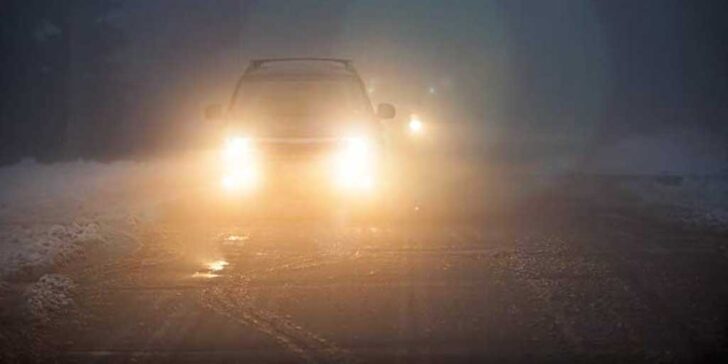
Night Driving is Challenging for All Drivers
Driving at night is challenging for all drivers.
First, you don’t see as well at night. Even with your headlights on high beams or when you drive in areas with good street lighting, you see far less of the road and your surroundings than when you drive in the daytime.
Secondly, darkness signals to your body that it is time to sleep. At night, your reaction time slows, and your ability to stay focused weakens.
Driving late at night is a common cause of fatigue and drowsy driving .
Stopping in a safe place and taking a break whenever you feel tired is your best action.
Another of the many challenges of driving at night is exposure to glare from streetlights or oncoming headlights. When constantly exposed to changing lighting conditions, it takes time for your eyes to adjust.

What is Glare?
Glare occurs when bright light enters your eye, and your eyes aren’t prepared to manage it.
Bright light can come directly from a light source on or beside the roadway or be a reflection.
For example, dark, wet pavement can reflect lights beside the roadway and cause discomfort or distraction. Wet pavement can also reflect headlamps from oncoming vehicles.
When driving in fog or heavy rain with high-beam headlights, you may experience light reflecting off the moisture in your headlights.
Direct glare sometimes comes from streetlights, neon light boards, and the headlamps of oncoming vehicles at night. But you will also likely experience glare when driving against a setting or rising sun.
You can usually avoid some of the glare when driving at night. If not, you can try to reduce its adverse effects.
Remember that glare severely affects your night vision. It leads to discomfort and distraction. It can also make you temporarily blind. When you drive longer distances and are constantly exposed to glare, it puts a heavy strain on your eyes and impairs your driving performance. That is why you should try to avoid glare as much as possible.
How to Avoid Glare when Driving in Fog or Rain
New drivers often need to be made aware that their own headlights can create a glare from the light reflection on raindrops and the moisture in a thick fog.
When driving with high beams in a fog, the fog appears brighter and thicker than when switching to low beams.
With high beams, you will see less of the road, and judging the speed and distance from other vehicles is harder. This is because the water drops block some of the light reflected by objects, like other vehicles, and less information about these objects reaches the driver’s eye. There is also more loss of contrast from objects ahead.
The heavier the rainfall or thicker the fog, the more glare you should expect with high beams headlights.
The best way to avoid or reduce glare when driving in fog, rain, or snow is to turn on low beams. Never use high-beam headlights. .
Always turn on your low-beam headlights in adverse weather conditions. If your wipers are on, you should also turn on your headlights.
Such weather conditions also mean that you should adjust your speed and make sure you can stop within the distance you can see ahead.
How to Avoid Glare from Oncoming Vehicles
If you meet another vehicle on a two-way roadway at night, you will likely get distracted by the oncoming headlights, even if the oncoming driver switched to low beams.
The trick is to never look directly at the oncoming headlights or focus on the center of the roadway. As always, keep your eyes moving and take in all your surroundings.
If the driver of an oncoming vehicle keeps their headlights on high beams, you can be severely blinded by the bright lights, and it may take several seconds before your eyes adjust again.
To avoid or reduce the risk of getting blinded by high beam headlights at night, you should glance toward the right side of your lane or the right road edge. On most roadways, you can see the painted lane line or edge line and stay on course until the glare source is gone.
Don’t be tempted to use dark glasses or sunglasses when driving at night. They will not help.
How to Avoid Glare from Direct Sunlight

Driving in the early morning hours after sunrise or late evening before sunset with the sun shining directly into your eyes can also be challenging.
Driving with the sun in your eyes is discomforting and disabling. The light can become so intense that it interferes with or blocks your vision. This disabling glare occurs because the light scatters when it enters your eyes. The contrast of objects ahead may get lost, reducing your ability to judge motion, which increases the risk of a crash.
Best way to reduce glare from direct sunlight is to use your sun visor and polarized sunglasses.
If the light interferes with your view of the road ahead, slow down and increase your following distance.
Read more: Dangers of Driving into Sun
Glare Becomes More Challenging the Older You Get
Senior drivers often find glare more challenging because their eyes take longer to recover from the bright lights.
As we age, our eyes become less flexible. In darkness, pupils dilate as much as they used to do when we were younger. The eye also requires much more light to see clearly. The cornea also clouds with age, making the eye more sensitive to glare.
The older we become, the higher the risk for eye problems like cataracts or glaucoma. Some eye problems can develop so slowly that the driver may not realize they have a problem until they have an eye exam.
If you often find glare disturbing and distracting and have problems recovering from it, you should see an ophthalmologist or an eye doctor as soon as possible. You should also avoid driving at night or under poor weather conditions.
If you are having trouble driving at night, the cause can range from needing vision correction with glare-resistant glasses or contact lenses to more severe conditions such as glaucoma, cataracts, or retinal problems.
Read more: When Should You Retire From Driving?
Headlight Use is Important for Your DMV Test
See if you can answer these questions:
Results
Well done!
Take some of our practice tests and learn more!


#1. To avoid glare from the headlights of an oncoming car at night, you should:
To reduce the effects of glare from oncoming headlights, do not look straight at headlights. Watch the lower right side of your lane or the road edge.
#2. If you feel tired when driving at night, it is best to:
If you feel tired when driving at night, it is best to stp and take a break.
#3. How should you avoid glare when driving in fog or rain?
Always turn on low beam headlights when driving in fog or a heavy rainfall.
#4. If you often find glare disturbing and distracting, you should:
If you often find glare disturbing and distracting, and find that you have problems recovering from it, you should see an ophthalmologist or an eye doctor as soon as possible. If possible, you should also try to avoid driving at night or under poor weather conditions.
Learn More
Why Night Driving Is So Dangerous – DMV Answers
When Should You Use High Beam Headlights?
When the Law Requires You to Turn on Headlights
DMV Test Questions for Your State
| Alabama |
| Alaska |
| Arizona |
| Arkansas |
| California |
| Colorado |
| Connecticut |
| Delaware |
| District of Columbia |
| Florida |
| Georgia |
| Hawaii |
| Idaho |
| Illinois |
| Indiana |
| Iowa |
| Kansas |

