
Why Do Bridges Freeze First?
The Crucial Fact to Learn for Your DMV Exam
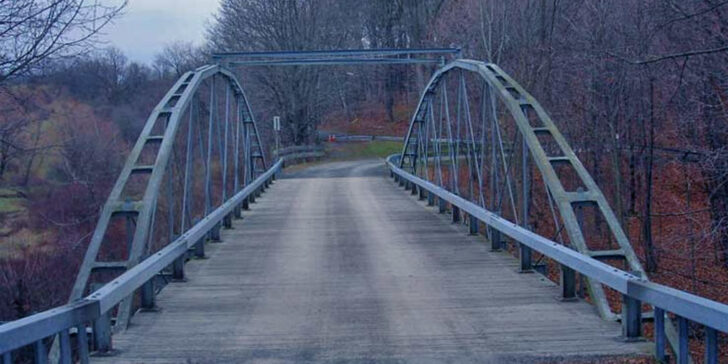
One of the essential facts to learn about winter driving is that bridges tend to freeze first and dry out last compared to other surfaces.
This intriguing phenomenon is why you will see the “Slippery When Wet” sign near bridges and overpasses.
It can be good to know why bridges exhibit this behavior and the factors that contribute to it.
Lack of Insulation
One of the primary reasons why bridges freeze faster than other surfaces is their lack of insulation.
Unlike the ground, which has some insulation properties due to soil and earth, bridges have no such natural insulation, making them more susceptible to temperature fluctuations.
The ground retains some heat from the previous day’s sunshine, which can help delay freezing. Bridges lack this source of warmth. Consequently, they cool down more quickly.
Exposure to Cold Air from Below
The structure of an elevated bridge allows cold air to circulate above and below. This exposure to cold air from underneath accelerates the cooling process.
Bridges are often made of concrete or metal. These materials have low thermal mass and poor insulating properties. As a result, they lose heat rapidly to the surrounding air, causing their temperature to drop quickly when exposed to cold weather.
A road takes advantage of insulation and warmth from the soil below and only loses heat from the surface.

Conduction, Convection, and Radiation
The materials used in bridge construction, such as metal and concrete, are excellent conductors of heat. This means that heat can easily flow from the bridge’s surface into the colder air, causing it to lose heat quickly.
The open design of bridges allows air to circulate around and underneath them, promoting convective heat loss. Cold air across the bridge surface removes heat, causing the bridge to cool rapidly.
Bridges also lose heat through radiation, as all objects emit thermal radiation. Bridges radiate heat into the cold night sky on clear winter nights, contributing to their cooling.
Slow Thawing Process
As the temperature rises during the day, bridges may remain icy while other surfaces thaw as the ground gradually warms up and provides some insulation.
Bridges take longer to dry out compared to other surfaces. The main reason is their continued exposure to cold air, especially underneath.
The Things to Remember
For your everyday driving, you should remember that whenever the temperature drops, be extra careful when approaching bridges and overpasses. Icy bridges can cause your car to skid.
On the DMV test, a standard question is which parts of a highway freeze first and dry out last.


DMV Test Questions and Answers by State
| Alabama |
| Alaska |
| Arizona |
| Arkansas |
| California |
| Colorado |
| Connecticut |
| Delaware |
| District of Columbia |
| Florida |
| Georgia |
| Hawaii |
| Idaho |
| Illinois |
| Indiana |
| Iowa |
| Kansas |


IT because bridges were made of metals and it not cannot possibly keep heat like grade road.