
West Virginia DMV Tests & Permit Practice – Questions & Answers

Results
Good job! This is a passing score. Do you want to try again?
This is not a passing score. Do you want to try again?


#1. When you see a sign with this shape and color, you must:
Stop signs are always octagonal (8-sided). A stop sign means that you must bring your vehicle to a complete halt at the marked stop line. If there is no marked stop line, stop before entering the crosswalk on the near side of the intersection. If there is no crosswalk, stop at a point nearest the intersecting roadway where you have a clear view of approaching traffic on the intersecting roadway before entering the intersection.

#2. What should you expect if you see an orange road sign on the highway?
Orange is used for construction and maintenance warning. The signs are usually diamond shaped. They notify drivers of unusual or potentially dangerous conditions near work areas.

#3. When you change lanes, you should:
Blind spots are areas on both sides of vehicles where you cannot see without turning your head.

#4. What happens when you accumulate 12 points or more on your driving record?
When you have six points or more on your record, the DMV will send you a letter of caution, urging you to be careful while driving and obedient of traffic laws. When you accumulate 12 points on your record, your license is subject to suspension.
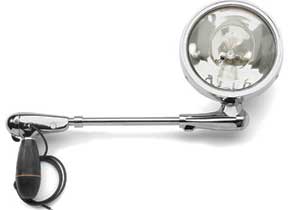
#5. Your car can be equipped with how many spotlights?
More than one spotlight is illegal.

#6. As the percentage of alcohol in your blood increases, you become more:
Even one drink of alcohol can affect your driving. As the amount of alcohol increases, your judgment, vision, and skill deteriorate. You have trouble judging distances, speeds, and movement of other vehicles. Finally, you have trouble controlling your vehicle.

#7. Which is true about safety belts?
When safety belts are used properly, they will keep you from being thrown forward or out of the vehicle. They also keep you in the proper driving position when driving on bumpy or twisting roads.
#8. On interstate highways like this, you should use the far-left lane for:
The basic rule is to drive in the right lane and pass on the left.
If there are three or more lanes in one direction, the middle lane or lanes are for through traffic. The left lane is for drivers who want to pass or turn left. The right lane is used by drivers who want to go slower or who are entering or turning right.

#9. When approaching another vehicle from behind at night, at what distance should you dim your headlights?
You must dim your headlights when within 500 feet of an oncoming vehicle and within 200 feet when following another vehicle.

#10. When stopping before a left turn, you should turn your front tires:
When waiting to turn left, do not turn the wheels to the left. Otherwise, a bump from behind could push your vehicle into oncoming traffic.
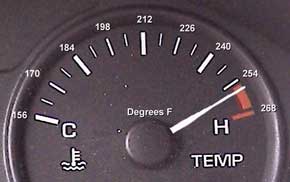
#11. If your engine is suddenly overheating:
If the warning light or gauge shows the engine is overheating, pull off the road and turn the engine off. Do not remove the radiator cap until the engine has cooled off .

#12. Parking is never allowed:
Never park in an intersection.
Parking in a disabled person parking space is allowed when you are authorized and display disabled license plate or placard.

#13. When driving in fog, you should:
Fog is an extremely hazardous driving condition. Smoke from factories, forest fires, and burning leaves can produce similar conditions. If you must drive in fog or dense smoke conditions, you should:
- Reduce speed.
- Be alert and prepared for an emergency stop.
- Use your low-beam headlights.
- Use your windshield wipers to remove moisture.
If you can barely see the road ahead, pull off to the side of the road and stop. Leave your lights on and also turn your hazard lights on.

#14. If you are in an intersection when an emergency vehicle with flashing lights approaches from behind, you should:
If you are within an intersection, including a roundabout, clear it before you pull over.
Remember, do not block intersections.

#15. What is a no-zone in terms of driving?
No-zones are danger areas around large vehicles where crashes are more likely to occur. These zones are blind spots to the front, sides, and rear of the vehicle.

#16. Unmarked crosswalks are crosswalks not marked by painted lines. They exist:
There is basically a crosswalk at every intersection, even if it is not marked by painted lines.
Remember, unmarked crosswalks are areas where a road intersects a sidewalk (joining sidewalks on opposite sides of the street) and there are no solid lines painted on the road.
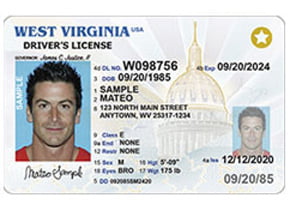
#17. A driver's license is:
Having a driver’s license is a privilege you earn. Along with this privilege comes a great responsibility.

#18. When approaching an intersection where the traffic light changes from green to yellow, you should:
A steady yellow light means caution. The light will soon be red. Stop if you can safely do so.
West Virginia has a restrictive yellow law, you are only allowed to drive through a yellow light if the vehicle clearance is within the intersection. This means you may receive a ticket if you are still within the intersection when the light turns red.

#19. What is the safest and easiest way to determine if a railroad crossing has multiple tracks?
When there are two or more tracks, you must be alert for a second train on the other set of tracks. A sign below the crossbuck indicates the number of tracks when there are two or more.

#20. This sign tells you:
Reduction of lanes. Right lane ends. Merge left.
Two lanes of traffic will soon become one lane of traffic. Right-lane traffic must yield when merging.

#21. What does this sign mean?
This is a regulatory No U-turn sign. It means that you are not allowed to make a U-turn.

#22. The road edge on the right side is marked by a:
Solid white lines divide lanes of traffic traveling in the same direction. Solid white lines are also used to mark the right edge of the road.

#23. Unless otherwise posted, what is the speed limit in school zones when children are present?
Designated speed limits, unless they are otherwise posted, or not reasonable, or not prudent for the conditions, are:
- Interstate, 70 mph.
- Open county highway, 55 mph.
- Business or residential areas, 25 mph.
- School zone (when children are present or when specified), 15 mph.

#24. When you drive through a construction zone, you should:
Various traffic control devices are used in road construction and maintenance work areas to direct drivers and pedestrians safely through the work site and to provide for the safety of highway workers. Be prepared to reduce your speed and use caution. Be cautious of road conditions, lane position, and the presence of workers.

#25. What does this sign mean?
Side road. Another road enters the highway from the direction shown. Watch for other vehicles entering or leaving the highway.
| This West Virginia Permit Practice Test | |
|---|---|
| Questions per test: | 25 |
| Question pool: | 500+ |
| Type of test: | Random multiple-choice |

| The West Virginia Written Knowledge Test | |
|---|---|
| Questions on real exam: | 25 |
| Passing score: | 76 |
| Correct answers to pass: | 19 |
| Allotted time to complete test: | 18 minutes |
| Wait time before retest: | 7 days |
We Help You Pass the West Virginia Knowledge Test
Every practice test at Driver’s Prep has 25 random questions from an extensive database with study questions. You can find all answers in the West Virginia Driver’s Licensing Handbook, so it is a good idea to start your studies by reading it.
When you study, use the practice test to verify your progress and level of readiness. Aim for a 100% score on each practice test.
Use the test as a supplement to the Driver’s Licensing Handbook, not instead of it. Practice tests are a learning tool.
Get the West Virginia Driver’s Licensing Handbook
Pick up at hard copy of the handbook at any local DMV office or download a PDF version online . The handbook focuses on road safety and mentions many “dos and don’ts .” Some of them will appear on your test.
After you have read the handbook:
Move on to the practice tests.
Try to understand questions and answers fully.
Don’t just memorize them.
The test asks questions in many different ways. Only one option is correct, but the options may differ from one test to another.
After each question, you will get instant feedback telling you if your answer is correct. There is also a short explanation to help you understand the correct answer when you miss a question.
Remember, the test is random, and you can take it as many times as you need.
Read more about questions and answers on the practice tests: Is it the Same Questions on the Real DMV Test?

Who Must Pass the West Virginia Knowledge Exam?
First-time applicants.
If you apply for your first driver’s license, you must always pass the knowledge examination.
Drivers with a WV license expired more than six months.
Anyone who lets their West Virginia license expire more than six months must pass all applicable examination tests again. Make sure you renew your license in time.
An expired regular Instruction Permit (ages 18 and over) also requires a re-examination.
Drivers with a revoked license.
Suppose you lose your driving privilege because of a license revocation. In that case, you must re-apply for a new license after the revocation period and take all examination tests.
Drivers with an out-of-state license that is not valid.
When you move to West Virginia with an expired out-of-state license, DMV will treat you as a first-time applicant. You must take all examination tests, vision, written, and road skills examinations before DMV issues a West Virginia license.
Suppose another state has suspended or revoked your license. In that case, that state must clear your license before DMV will issue a West Virginia license.
Drivers with a foreign driver’s license.
Drivers with a driver’s license from a country other than the United States, Canada, or Germany must apply as first-time applicants and pass all tests.
New Residents with a Valid Out-of-State License
If you move to West Virginia and your out-of-state license is valid, you must pass a vision test, complete a brief alcohol awareness course, and surrender your out-of-state license. DMV will generally waive the written knowledge test.
How Many Questions are on the West Virginia Knowledge Test?
The West Virginia knowledge examination has 25 questions covering basic knowledge of traffic rules, regulations, signs, and signals found in the Driver’s Licensing Handbook. You must answer 19 out of 25 questions correctly. The passing score is 76% and among the lowest in the United States .

What is on the West Virginia Knowledge Test?
Besides questions about standard traffic rules, safe driving techniques, and West Virginia traffic laws, the test will also verify your awareness of the effects of alcohol and drugs on safe driving.
The examination shall include a test of the applicant’s eyesight, the applicant’s ability to read and understand highway signs regulating, warning, and directing traffic, the applicant’s knowledge of the traffic laws of this state, and the applicant’s knowledge of the effects of alcohol upon persons and the dangers of driving a motor vehicle under the influence of alcohol.
What You Must Know about the West Virginia Knowledge Test
In West Virginia, the written test has a time limit of 18 minutes. If you fail to answer some questions within the allotted time, DMV will count these missed answers as incorrect.
Remember, 18 minutes is still plenty of time. Carefully read all questions before you answer, and don’t let the time limit disturb you. Most test takers finish in less than 10 minutes.
If you have trouble reading, audio versions of the knowledge test are available. Headsets can be limited, so you may have to wait for your turn.
Oral tests are not available. Employees of the DMV may not read the questions to you, re-word the information, or provide additional help explaining questions.
No other person than the applicant is allowed in the exam room. No cell phones, PDAs, blue-tooth devices, electronic devices, or similar will be permitted.
If you fail the test, you must wait at least seven days before you can retake the test. There is no limit on how many you may take.
Can You Take the Knowledge Test from Home?
West Virginia DMV offers online permit testing from the comfort of your home.
To start the testing process, you must:
- Register and create an account.
- Agree to online testing rules.
- Pay applicable fees.
You must also have a laptop or a desktop computer with an internet connection and camera. The online test does not work on a mobile device.
If you are under 18, you must also have a supervising adult who is at least 18 years of age and a valid driver’s license from a U.S. state. The system will validate the identity of the supervising adult during the registration process.
It is optional to visit a DMV office before the test. Still, you must provide the necessary documents after you have passed the test and before DMV issues your learner’s permit.
What You Should Know about the WV Home Testing
- All Applicants must provide required identity registration information which will include First Name, Last Name, Street Address, City, State, Zip Code, Date of Birth and last five digits of SSN.
- Applicants under the age of 18 must have an adult over the age of 18 to participate in the registration process. It is preferable that the adult be the parent or legal guardian, but not necessary.
- The responsible adult, parent or legal guardian must provide First Name, Last Name, Date of Birth, last five digits of SSN, and a valid Driver’s License number.
- The test program uses specialized software to verify your identity information. This software has access to the one of the largest electronic databases for legal and public-records related information in the world. If there is a mismatch of information from the information contained in these data bases and what the applicant enters, you will be required to appear in-person to take the test.
- The online testing program will take a photo of the applicant prior to starting the test for the purpose of Applicant identification.
- The online testing program will verify that a webcam is actively connected to the Applicant’s device and is able to see the applicant prior to the test beginning.
- Be aware of your background on the webcam test. Walls with pictures will confuse the facial recognition technology and create suspicion of fraud activity.
- When taking the on-line knowledge test, you must use a device with a mouse or mouse pad-controlled curser. You CANNOT take the test on a phone or a device with touch screen.
- The Applicant CANNOT navigate away from the screen while taking the test. The applicant must always keep the curser in the red box on the screen. When the curser leaves the red box area of the screen the program software may determine the tester is opening another tab to look for test answers. You will receive two warnings for leaving the test screen. After two warnings the program will stop the test and you will be failed for leaving the screen.
- Applicants who fail testing due to knowledge must wait seven (7) days before attempting to retake the test.
- The online test program will provide the Applicant with a receipt of successful payment via email.
- If the Applicant fails the test, the Certificate of Completion will provide a link to the study guide.
- Refunds will not be issued to the Applicant because of test failure due to knowledge.
- Refunds will not be issued to Applicant because of test failure due to fraud.
- Upon completion of the test, you will receive a Completion Certificate. This certificate along with the required identification and residency documents must be presented at your local DMV. At this time your official license photo will be taken, and your license permit issued.


Photo credits:
Struggling woman – CollegeDegrees360
Young man with Help sign – Marcos Calvo Mesa
Vehicle on road – West Virgina DMV


Hello! My name is Kynlee and I work at a Mexican restaurant, I have a friend who doesn’t speak the best English but wants to learn how to drive, do you have any Spanish driver prep books?