
Tennessee Knowledge Tests & Permit Practice – Get All Questions
Results
Yes! This is a passing score. Do you want to try again?
This is not a passing score. Do you want to try again?


#1. If you eat before and while you drink alcohol:
All the alcohol consumed eventually gets into the blood whether you have eaten or not. Food in the stomach causes alcohol to be absorbed more slowly, slowing down the rate and the level of intoxication.
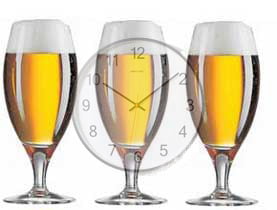
#2. How long will it take your body to cancel the intoxicating effects of three alcoholic drinks?
Once in the bloodstream, the alcohol is distributed to all parts of the body, including the brain and liver. Upon reaching the liver, the alcohol immediately begins to be oxidized. However, the liver can only oxidize about one drink per hour.
In other words, it takes about one hour to cancel the effects of one drink, and it takes about three hours to cancel the effects of three drinks.

#3. When you see a sign with this shape and color, you must:
This sign tells you that you are approaching an important street or highway and that you must bring your car to a complete stop, not going beyond a stop line or crosswalk.
If you cannot see, then proceed cautiously to a point where you can see, and then go only if you can do so safely.

#4. What does this sign mean?
No Right Turn. This sign means that you are not allowed to turn right at the intersection.

#5. After stopping, left turns against a red arrow are:
When the arrow is red or your lane has the red light, all turns are prohibited. This is true even if other lanes of traffic have a green signal and your path through the intersection appears to be clear.

#6. On a multi-lane highway like this, you should use the far-left lane for:
Use left lane for passing. Do not tie up traffic in the left lane. If you are traveling in the left lane and someone comes up behind you at a faster speed, move one lane to your right.

#7. Which statement is true about alcohol and driving?
The two abilities most important to the driving task are judgment and vision, both of which are affected by small amounts of alcohol. Your ability to judge speed, time and distance are altered after only one drink. Each extra drink greatly affects your driving ability.

#8. You should adjust your seat and mirrors:
Before you drive, check the condition of the vehicle (windows, lights, body damage, condition of the tires and potential fluid leaks). Adjust the seat, mirrors, and head restraint properly. Fasten and adjust safety belts. If you have passengers, make sure all passengers are using safety belts or child restraints.

#9. When you meet a truck coming from the opposite direction, keep as far as possible to the side:
When driving beside large trucks or any large vehicle, the wind currents created by the larger vehicle may affect your steering. Give the truck plenty of room. When you meet a truck coming from the opposite direction, keep as far as possible to the right of the road to avoid being sideswiped and to reduce wind turbulence between vehicles. The turbulence pushes vehicles apart. It does not suck them together.

#10. You can park your car:
You can park 50 feet (more than 30 feet) from a traffic signal.
Do not park your car in front of a public or private driveway, within 15 feet of a fire hydrant, or on a bridge.

#11. If you see a deer on the side of the road, you should:
If you see one deer, there may be several others nearby. Always watch for more than one deer.

#12. When you want to pass a motorcycle from behind, you must:
Pass as you would pass a car, and don’t pass too close or too fast as the blast of air can blow a motorcycle out of control. Motorcycles have the right to the use of the full lane. You must never try to share a lane with a motorcycle

#13. If you are between the ages of 13 and 17 and are found to have consumed alcohol, your driving privilege will be suspended:
If you are between the ages of 13 and 17 and are found to have possessed, consumed, or sold either alcohol or drugs, your driving privilege will be suspended for one year or until age 17, whichever is longer.

#14. When approaching a stopped school bus with flashing red lights traveling in the opposite direction on an undivided roadway, you must:
You must stop no closer than 25 feet from the bus.

#15. When you see this sign, you should:
School Zone.
You will see this sign near school grounds or buildings. It warns you to slow down, drive with caution and watch for children. This sign is placed as you approach a school.

#16. What is true about a center left turn lane?
Center left turn lanes are reserved for vehicles making left turns in either direction from or into the roadway. These lanes cannot be used for passing and cannot be used for travel further than 300 feet. On the pavement, left turn arrows for traffic in one direction alternate with left turn arrows for traffic coming from the other direction.
These lanes are marked on each side by solid yellow and broken yellow lines. Enter the shared lane only when safe to do so.

#17. What is the best thing to do if you feel tired while driving?
Never drive if you are sleepy. It is better to stop and sleep for a few hours than to take a chance on trying to stay awake. If you fail to stay awake it could become a real nightmare.

#18. A pedestrian has entered a crosswalk and should have the right-of-way:
Yield and give pedestrians the right-of-way when pedestrians are in a crosswalk (marked or unmarked) or when the pedestrian is upon the half of the roadway upon which your vehicle is traveling or when the pedestrian is approaching so closely from the opposite half of the roadway as to be in danger.

#19. Why is it important to know what kind of braking system your vehicle has?
Knowing how to apply your brakes in an emergency situation may save your life. It is important to read the owner’s manual of your vehicle to learn the safe and proper operation of your brake system.

#20. Your doctor has given you prescription medicine. Why should you ask how it will affect you?
If your doctor prescribes a tranquilizer or sedative, make a point to discuss how the drug will affect your ability to drive safely. Just because a drug is prescribed, it is NO defense for driving under the influence of it. Even some over-the-counter medicines can affect driving. Read labels and pay attention to warnings. If you have questions about a particular drug or combination of drugs, check with your doctor or pharmacist.
| This Tennessee DMV Practice Test | |
|---|---|
| Questions on each test: | 20 |
| Question pool: | 800+ |
| Type of test: | Random multiple-choice |
| Tennessee DMV Written Knowledge Test | |
|---|---|
| Questions on exam: | 30 |
| Passing score: | 80% |
| Correct answers to pass: | 24 |
| Allotted time to complete test: | No limit |
| Wait time before retest: | 1 day |
About This Tennessee Practice Test
This practice test for the Tennessee permit or knowledge exam has 20 questions. It is slightly shorter than the actual exam but covers the same items as the real exam.
25% of the questions (5 out of 20) relate to alcohol, drugs, and the consequences of impaired driving.
We have designed practice test questions to help you study and prepare for the required knowledge examination. They can help new drivers applying for their first permit or drivers who are forced to reapply for a license and pass the examination again.
Each practice test is random, meaning we draw questions from a larger bank of questions. You can expect new questions each time you restart the test. It also means you can take the test as many times as you need to prepare for your Tennessee exam.
You will get instant feedback after each question, and when your answer is incorrect, there is also a short description of the correct answer. The system reveals your final score at the end of the test.
The test is free and does not require registration.
Please be aware that this is not an official test. It does not qualify you for a permit. Driversprep.com is not affiliated with Tennessee’s Department of Safety and Homeland Security (TDOSHS) or Driver Services.
The test should be used only as a learning tool.
How Many Questions Are on the Real Permit Test in Tennessee?
The knowledge examination in Tennessee consists of 30 questions. The passing score is 80%, which means you must answer 24 questions correctly to pass.
What is on the Permit Test in Tennessee?
The main areas covered by the exam questions are traffic signs and signals (25%), safe driving techniques (25%), rules of the road and Tennessee laws (25%), and drugs and alcohol (25%).
The percentage is a rough estimate of the number of questions on the test. Each test is random and will differ from person to person. There is, however, a clear focus on drugs and alcohol on the Tennessee exam.
The purpose of the knowledge exam is to verify the following:
“…the applicant’s ability to read and understand highway signs regulating, warning, and directing traffic, the applicant’s knowledge of the traffic laws of this state…”
The state of Tennessee has also decided that:
“…all examinations administered to applicants for a driver’s license or intermediate driver’s license shall include questions concerning drugs and alcohol, the effects of those substances on a person’s ability to operate a vehicle, and the applicable Tennessee laws pertaining to operating a vehicle while under the influence of alcohol or drugs, and the alcohol and drug-related questions shall constitute one-fourth (¼) of the written examination…”
How Should I Study for the Tennessee DMV Knowledge Exam?
Always start by getting the latest copy of the Tennessee Comprehensive Driver Manual. You can get a hard copy at TN Driver Services or download a PDF-version online .
Make sure you read the manual. You can find answers to all questions in this manual.
When you have read the manual and learned everything you need to know, use the practice tests to verify your knowledge. The practice tests will show you what areas to focus more on. So, wait to get rid of the manual.
While most new applicants fail the knowledge test the first time, it is possible to ace it with just a little effort. Learn how to do it: How to Ace the Test .

Who Must Take the Tennessee Knowledge Test?
All new drivers.
If you are a first-time applicant, you must always pass the Tennessee vision screening, knowledge test, and road test. To qualify for a first-time Tennessee class D license, you must be at least 16 years. All new drivers under 18 years must also meet special qualifications set in Graduated Driver’s License Program (GDL) .
Drivers with a license expired more than one renewal cycle.
Your Tennessee license is valid for eight years when you are 21 or older. When your license expires, you are no longer entitled to drive a motor vehicle. Tennessee does not have a grace period.
If you wait 30 days after the expiration date to renew your license, you must pay a late fee, doubling if you wait six months to renew. If you wait over one renewal cycle (8 years), you must apply for a new license and repeat all tests.
Drivers with a foreign license.
Drivers who move permanently to Tennessee and wish to drive must convert their foreign license to a Tennessee Driver’s License. Knowledge and road skills tests are required for all foreign drivers except holders of valid licenses from Canada or Germany.
New residents with a valid out-of-state license are also exempt from the examinations. However, A new resident with an out-of-state license that expired more than six months must retake all applicable tests.
The Official Knowledge Examination
The official knowledge examination covers everything you need to know to drive safely on Tennessee roadways. You can take the test at a Driver Services Center or through a driving school.
The Department administers the knowledge tests on computerized testing machines. In some rare situations, the examiner can offer the written test on paper, but it is unlikely to happen.
For applicants who have a learning disability or cannot read, oral tests are available by appointment at some of the Driver’s License Service Centers. Remember to call ahead.
If you are hard of hearing, you can ask for a certified sign language interpreter to help with the exam.
Teenagers between the ages of 15 to 17 who are required to take a written test can now take it online under a parent’s supervision. You must register and download the Tennessee Proctor Identification (PID) App.

Available Languages
The computerized testing stations have English, Japanese, Korean, and Spanish knowledge tests.
Is the Tennessee Permit Test Hard?
Tennessee Driver Services estimates that one out of two test-takers fails the written knowledge exam, which is a failure rate of 50%.
The more you practice on this website, the better your chances of passing the examination the first time.
Cheating on the DMV Test
Any cheating will result in an automatic failure, and you must wait at least 30 days before you can retake the test.
Forms of cheating include, but are not limited to, the following:
- Use of any form of written notes (including notes on paper, clothing, body, digital pagers, etc.)
- Talking during the examination (including cell phone use.)
- Attempting to allow another person to take the examination.
Remember, you must turn off all cell phones, pagers, or text messaging devices during both the written test and road skills exam.
Will I be Tested When I Renew My Tennessee License?
No, the Tennessee law does not require re-testing when you renew your driver’s license – regardless of age. Ensure you don’t let your license expire for over eight years.
After you turn 21, your Tennessee driver’s license is valid for eight years. Approximately two months before your license expires, TN Driver Services mails you a courtesy renewal notice. The renewal notice tells you how to renew your license.
If it is the first time you renew your license, you must visit a Driver Service Center and prove that you are a United States Citizen or a lawful permanent resident.
After that, and if you have a valid photo license, you may renew by mail or online. If you do, this new license will feature your old photo. To get a license with a new photo, you must visit a Driver Service Center.
Please note that this doesn’t apply to holders of Class A, B, or C Commercial Driver’s License (CDL). They must appear in person to renew their CDL license. They must also show their current valid DOT medical card at the time of renewal.
Alcohol Questions on Your TN Test
By law, 25% of the questions on your knowledge test will address alcohol/drugs and impaired driving. Here are more resources to help you learn more about alcohol and drugs:
Tennessee Graduated Driver’s License (GDL) Program
The Tennessee Graduated Driver’s License Program aims to help young drivers under 18 years gain driving experience in a safe environment. It places certain restrictions on learner permits and intermediate driver’s licenses. The program requires parent/legal guardian involvement and emphasizes the importance of a good driving record.
You can get your first Tennessee learner’s permit when you are 15 years. You must provide proof of school attendance/progress and have a sponsoring adult who signs the affidavit form.
You can skip a driver’s education course in Tennessee to get your permit or intermediate license. Enrolling may still be a good idea since they provide professional help and discounts on insurance. In most classes, you can start even without having your first permit.
| Learner Permit |
|---|
| Minimum age: 15 years |
| Hold period: 180 days |
| Intermediate Restricted License |
|---|
| Minimum age: 16 years |
| Hold period: One year |
| Intermediate Unrestricted License |
|---|
| Minimum age: 17 years |
| Hold period: Until 18 years or graduated from school |
You can get your Class D regular and unrestricted driver’s license when you are 18 years old, graduate from high school, or receive a GED, whichever is sooner.
When you move on to get your regular license, the word “Intermediate” will be removed from the license.


Dear sir or madam I need license and I am new in Nashville just 10 days ago from Afghanistan and I have parole visa and also work authorization latter and my social security card is under process what should I do for Tennessee driving permit
Thanks you
You should contact your local Tennessee DMV service center; they will help you.
You need to bring proof of identity and proof of Tennessee residence. If you have a passport stamped with “Processed for I-55I” or a Form I-94, you must bring them.
Start studying for the knowledge test, since that will be the first step after DMV has accepted your documents.