
Georgia DDS Driver Tests & Permit Practice Tests
Results
Great! This is a passing score. Do you want to take another practice test?
This is not a passing score. Let’s take another practice test!


#1. Besides standing momentarily to pick up or drop off passengers, you must not park your car within how many feet of a fire hydrant?
Parking is not allowed within 15 feet of a fire hydrant. You may stop only momentarily to pick up or drop off passengers.

#2. To avoid getting tired on a long trip, you should:
Do not drive if you are tired. More frequent stops, more fresh air, lively radio programs and other measures can help you to avoid drowsiness and inattention.
Highway hypnosis is a condition of drowsiness or unawareness brought on by monotony, the sound of the wind, the tires on the pavement, and the steady hum of the engine. Always stop driving if you feel drowsy. Do not rely on stimulant drugs (also called Stay Awake Drugs). They are likely to make your driving even more hazardous.
#3. If a judge finds you guilty of littering on a highway, the offense carries a maximum prison sentence of:
Persons convicted of Georgia’s Litter Control Law may be assessed a fine up to $1,000 and a 12-month jail term. In addition, if convicted of littering, a judge could order the convicted person to pick up and remove litter from any designated area.

#4. What should you do at the first sign of rain or snow?
Slow down at the first sign of rain, drizzle, or snow on the road. Turn on your windshield wipers, headlights, and defroster.

#5. What is Joshua's Law?
Effective January 1, 2007, the State of Georgia implemented new legislation to promote increased teen driving safety. The highlights of Joshua’s Law include:
- Approved driver education training required to obtain a Class D automobile license at age 16.
- Approved driver education training required to obtain a Motorcycle Permit (MP) at age 16.
- You must be 17 years of age to obtain a Class M motorcycle License.
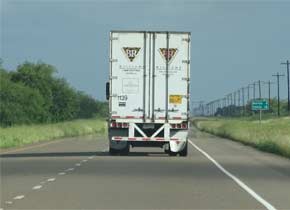
#6. The areas around trucks where the trucker cannot see your car are known as:
The No-Zone represents the danger areas around trucks and buses where crashes are more likely to occur. Some No-Zones are actual blind spots or areas around trucks and buses where your car disappears from the view of the drivers. These blind spots are the Side No-Zone, Rear No-Zone, and Front No-Zone areas.

#7. To avoid driving in another driver's blind spot on a multi-lane highway, you should:
Traveling in a position where the driver ahead of you cannot observe your vehicle in the rear view or side mirrors is a dangerous practice. Either stay far enough behind so that the other driver can see you, or pass the vehicle.

#8. When approaching within 100 feet of a tunnel where your view is blocked, you must:
Passing is prohibited on two-lane roads when the view is obstructed upon approaching within 100 feet of any bridge, viaduct, or tunnel.

#9. If you drive a vehicle in reckless disregard for the safety of persons or property, you are guilty of:
Reckless driving is defined as driving any vehicle in reckless disregard for the safety of persons or property. Penalties for reckless driving can include a fine of up to $1000, imprisonment for up to 12 months, and, if the driver is under 21 years of age, conviction will result in a suspension of all driving privileges.

#10. Even if you do not see other vehicles around, you should signal:
You must give a continuous turn signal for an adequate distance to alert other drivers before turning or changing lanes. Never decide to make a turn at the last minute. You must also signal before stopping or suddenly decreasing speed. Any stop or turn signal must be given either by means of the hand and arm or by signal lights (brake lights).

#11. When should you use your high-beam headlights?
Use high-beam headlights only when driving in rural areas and when other cars are not nearby.
You should dim (lower) your headlights when:
- Within 500 feet of an approaching vehicle so as not to blind the driver.
- Following closely (within 200 feet) behind another vehicle.
- Driving on lighted roads.
- Driving in rain, fog, snow, or smoke.

#12. Near schools, watch for:
Pay special attention to children who may be walking along or crossing the roadway. Be especially alert during morning and afternoon when children are going to and from school or at play.

#13. After an accident, the most important thing you can do to reduce the chances of secondary crashes is:
When a traffic accident occurs on a multi-lane highway or expressway, and if there is no severe injury or death, it is the duty of the drivers of the vehicles involved to move their vehicles from the roadway to a safe location along the shoulder, emergency lane, median, or any other safe refuge. Drivers should only do this if the vehicles are capable of being driven normally and successfully, and driving the vehicles will not present any further hazard or harm to the vehicles themselves, to the driver, to persons nearby, or to the roadway.

#14. When two vehicles from different directions arrive at the same time at a four-way stop, which should have the right-of-way?
At a four-way intersection where all drivers are faced with stop signs, all drivers must yield to pedestrians. Otherwise the vehicles should proceed through the intersection in a first to arrive, first to proceed order. If two vehicles reach the intersection at approximately the same time, yield to any vehicles on your right.
Remember, there may be instances in which you as a driver or pedestrian have the legal right-of-way over someone else, even though the other person does not realize it and is not obeying the rules of the road. In those instances, the right-of-way should be yielded in order to prevent a crash.

#15. If you see flashing red lights at a railroad crossing, you must:
You must always stop within 50 feet, but not less than 15 feet, from the nearest rail of a railroad crossing when any of the following apply:
- The signal is flashing.
- The crossing gates are lowered.
- A flagman is giving a signal.
- A train is approaching so closely as to create an immediate hazard.
- A train gives a warning signal and is an immediate hazard due to its speed or nearness to the crossing.
- A stop sign is posted.

#16. When a traffic signal is showing a flashing red light, you must:
A red flashing light means you must stop completely, treat as you would a stop sign. Proceed with caution only after yielding the right-of-way to pedestrians and to other vehicles at the intersection.
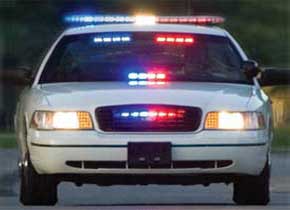
#17. When an emergency vehicle using flashing lights approaches you from behind, you must:
If police, fire, or ambulance service vehicles are using their emergency lights (blue or red) and sirens, safely maneuver your vehicle out of their way. You should slow your vehicle and move over to the shoulder of the road, or if that is not possible, as far to the right of the roadway or lane as you can, and stop until the emergency vehicle has passed.

#18. When turning left from the lane closest to the center of a street, you should:
When safe to do so, and when permitted, make your turn so that your vehicle ends up in the lane closest to the center lanes(s) in your direction of traffic on the street you turned onto.
If there are multiple turning lanes on the street you are turning from, complete the turn so that your vehicle ends up in the corresponding lane on the street you are turning onto.
Remember, once you have entered an intersection to make a left turn, you cannot change lanes in the intersection.

#19. What is true about a shared center turn lane?
A center turn lane is bordered by solid yellow and broken yellow lines. It is provided to make left turns from both directions. A motorist desiring to turn left should proceed to the turn lane just prior to making a left turn. Georgia law prohibits the use of this lane for any purpose other than making a left turn. You may enter this lane no more than 300 feet from the location of the left turn.

#20. If it feels like your tires have lost traction with the surface of the road (hydroplaning), you should:
The best thing to do is to take your foot off the accelerator and let the car slow down.
| This Practice Test – Georgia Road Rules | |
|---|---|
| Number of questions on each practice test: | 20 questions |
| Question pool: | 500+ |
| Test is randomized. | |
Facts about the Georgia DDS Knowledge Examination
| DDS Knowledge Test for Permit and Driver’s License | |
|---|---|
| Number of questions on exam: | Road signs: 20 Road rules: 20 Total: 40 |
| Passing score: | 75 percent |
| Correct answers to pass: | Road signs: 15 Road rules: 15 |
| Allotted time to complete test: | No limit (but must be completed before closing) |
| Wait time before retest: | 1st failure: 1 day 2nd or subsequent failure: 7 days |
The Two-Part DDS Knowledge Exam
The written knowledge exam for a learner’s permit or driver’s license is a two-step examination.
The first step has questions about the meaning of Georgia highway signs. You must identify road signs by color, shape, symbols, and message. You must correctly answer 15 out of 20 questions to pass this part.
The second step is a road rule test. It asks questions about your responsibilities as a driver, Georgia traffic laws, safe driving techniques, and standard road rules. Again, you must correctly answer 15 out of 20 questions.
Remember, you cannot combine the results from the two tests to reach a passing score. You must pass each test with a score of at least 75%.
When students fail the test, they often fail the second part about driver responsibility, knowledge of laws, and safe driving practices.
By making sure you can answer all questions on the practice tests, you will pass the official Georgia knowledge examination the first time.
What are the Georgia Practice Tests?
Each practice test has questions from the GA Driver’s Manual and actual DDS examinations.
On this practice test, we pick 20 random questions about road rules from an extensive database with more than 500 Georgia test questions.
Like the actual DDS examinations, each practice test is random with different questions.
After every question, you get instant feedback and have access to brief explanations. It is the best way to learn everything you need to know for your Georgia driver’s license or permit exam.
The purpose is not to show you every possible question from a real live test, but to help you study for your exam. You build up confidence by verifying that you know the answers to practice questions. You will pass the real knowledge exam with ease.
You test your knowledge of Georgia road signs here: Georgia DDS Road Signs Recognition Test – 20 Questions

Get the Georgia Driver’s Manual!
If you haven’t done so already, start by getting the latest version of the Georgia Driver’s Manual . It is best if you have a clear understanding of everything described in the Driver’s Manual. Identify topics that can be your weak spots.
Laws controlling what you can and cannot do are fundamental for the test and your everyday driving.

Verify Your Progress with Practice Tests
Practice tests help you measure your improvements quickly and objectively.
1 Start by reading the manual to get an overview of what you need to learn.
2 Take a few tests at the beginning of your study period and make a note of questions you miss.
3 Look up answers in the Georgia Driver’s Manual. Pay extra attention to those weak spots and study the full chapters.
4 Engage others in your studies and discuss safe driving with parents or friends. Ask questions – even about things you think you understand.
5 In the middle of your studies, take more practice tests. If you still miss some questions, look them up in the manual.
6 At the end of your studies you should be able to answer all questions correctly.
Some people will say you can learn everything you need to know by taking practice tests. Being a safe driver is not about passing a test. Instead, learning as much as possible before you get behind the wheel would be best not only for your own sake but for the safety of everyone on the road.
Read more: Risky Study Tactics that Could Cause You to Fail
Reminder to Teen Drivers
For teen drivers, it is essential to remember that there is still an alarmingly high rate of accidents among drivers 15-20 years old. An average of 887 young drivers are injured daily in the United States.
“Drivers of all ages need to focus on the road and other activity around them instead of the radio, food, or a cell phone conversation. But many younger drivers have not yet developed the ability to decide which activities (other cars, pedestrians, traffic signals, emergency vehicles) going on around them demand their attention first.”
Erin Huskey

Who Must Take the Georgia Knowledge Test?
First time applicants
All persons applying for an original Georgia license must pass a knowledge exam, including road signs and road rules tests.
Applicants with an expired license
If you want to renew a driver’s license that has expired more than two years, you must pass the knowledge test again.
Applicants from another country
A knowledge test is required when you have a license issued in another country and move to Georgia.
Citizens of some foreign countries may be exempt from knowledge and skills testing. For a list of these countries, visit www.dds.ga.gov.
You Don’t Have to Take the Georgia Knowledge Test
If you have a license from another state
Do you hold a valid driver’s license or permit issued by any other state of the United States or by the District of Columbia? Unless it has expired over two years, you will get a comparable license or permit issued by Georgia DDS without taking the knowledge exam.
If you renew your Georgia license
Unless your driver’s license has expired for more than two years, no testing is necessary when you renew your license. In most cases, you can renew online or by mail.

What Documents Do You Need to Apply for a Permit or License?
1 You must show an original or certified document that proves your full name and birth date, such as a certified Birth Certificate, US Passport, or Certificate of Naturalization.
2 DDS will ask for your Social Security Number. Bring your Social Security Card, a W-2 form, or a pay stub with your full name and SSN.
3 You also need to prove that you live in Georgia. Bring school records, employment records, phone bills, utility bills, bank statements, credit card statements, or similar that show your street address. You need two documents from different sources that cannot be older than six months. [Read more ]
If You are under 18 Years
If you are under 18 years, you must bring a parent or legal guardian, a responsible adult, or an authorized driver training instructor to sign the form for a permit or license. You must also show your Current Certificate of Enrollment from the school.
If You are a Resident Alien
If you aren’t a US citizen, you must bring your passport and original immigration documents (including your green card or visa). You must also be able to prove that you have established residency in Georgia (2 documents with your address). Note that DDS doesn’t accept translated documents. A birth certificate in a non-English language is not accepted.
What to Remember about the DDS Test
Once DDS has accepted your documents and you have paid the fee, you can take the vision screening and knowledge test.
DDS usually gives knowledge exams on a walk-in basis at every Customer Service Center. Still, you must begin taking the written test at least 30 minutes before closing.
The first test sequence with questions about Georgia road signs and signals is in English only. You must understand simple English, such as the text on some highway signs.
The second sequence with road rules questions is available in these languages:
Chinese
English
French
Hindi
Japanese
Korean
Spanish
Turkish
Vietnamese
Special help for customers with reading disabilities and hearing impairment is also available. Check with your local Customer Service Center.
Don’t Cheat on the Knowledge Test
You may not bring pens, pencils, paper, books, or other items into the testing area. DDS also prohibits cell phones, text messaging, and other wireless devices.
You cannot speak to other people during the test. If you have questions, you must alert the staff.
If the staff catches you cheating on the exam, they will mark your test as a failure. DDS will also likely act against your license application or driving privilege. If someone assisted you in cheating, DDS might also act against that person’s driving privilege.

What about Cheat Sheets?
Cheat sheets are a learning tool, sometimes advertised as the only thing you need to pass the test.
They don’t contain actual tests or exact questions/answers. You must still learn the facts in the Driver’s Manual.
Just memorizing answers is also a poor way of gaining knowledge.
Cheat sheets, however, can be helpful as quick recaps of the most common items on the test. But don’t bring them to your Customer Service Center and not into the testing area.
What Happens if You Fail the Knowledge Test?
If you fail the first time, you must wait at least one day before you can retake the test.
After a second (or subsequent) failure, you must wait at least seven days to retest.
These waiting times also apply to the behind-the-wheel test.
Be aware that you must pay the test fee every time you attempt the knowledge test. Retesting is also subject to reservation availability during the pandemic.
It is a good idea to make sure you can pass the exam the first time.
What Happens after You Have Passed the Permit Test?
DDS issues a Class C Instructional Permit (CP). With this permit, you can start learning the skills of safe driving.
But you can only drive when accompanied by someone at least 21 years old and licensed to drive a Class C vehicle. The supervising driver must be fit and capable of exercising control over the vehicle. They must also sit in the front seat beside you.
You must hold your permit for at least one year and one day before you can move on to the next step (Class D Provisional License). During this time, you must complete at least 40 hours of supervised driving experience, of which 6 hours must be at night.
The more you practice with someone beside you, the better driver you will be.
When you apply for your provisional license, you must also show that you have completed a driver’s education course (this is not mandatory if you are 17 years or older).

Common Questions
How many questions are on the Georgia Knowledge Test?
There are 40 questions on the Georgia DDS test. You will get 20 questions about common road signs, traffic signals and road markers. The next 20 questions are about traffic laws, driver responsibilities, and safe driving techniques. All questions are drawn from the information in the Georgia Driver's Manual.
What is the passing score on the permit test in Georgia?
The passing score on the permit test in Georgia is 75%. There are two parts that have 20 questions each. You must have 15 correct answers on each part.
Is the Georgia permit and driver's license test hard?
Georgia DDS does not release failure rates, but the difficulty level on part 1 (road signs) is generally considered to be easy and the level is medium on part two (road rules).
Can I take the Georgia knowledge test online?
Unlike some other states, Georgia does not offer any kind of online testing from home. There are, however, several driving schools that are certified third party tester and that will offer the written knowledge test at their locations. You can also take the test at a DDS customer center.
What happens if I fail the written test in Georgia?
The first time, you may retake the test the next day. If you fail a second time, you must wait at least 7 days to retest. A 7-day waiting period also applies to any subsequent failures. You must pay the fee of $10 each time you take the test.
Will practice tests help me pass the Georgia written test?
Practice tests are a learning tool. They give you an idea about what questions will be asked. They also help you track your progress. When you find all practice test questions easy, you may be ready for the real thing.
Can I take the Georgia permit test in Spanish?
The first part of the Georgia knowledge test is always in simple English. The second part is available in several different languages, including Spanish.

More FAQ
At what age can I get a Learner's Permit in Georgia?
In Georgia, you can apply for a Learner’s Permit when you are 15 years old.
At what age can I get a Provisional Driver’s License in Georgia?
After having a valid learner’s permit for one full year and a day, you may apply for your first driver’s license (Class D provisional license), also called an intermediate license. This means you must be at least 16 years old (plus one day) before DDS issues the provisional license.
At what age can I get an unrestricted Driver’s License in Georgia?
If you are 18 years old, you can exchange a Class D restricted license for a Class C unrestricted (full) driver's license. You can do this by using DDS Online Services or by downloading the DDS 2 Go Mobile App.
What are the driving restrictions with a learner's permit in Georgia?
The Georgia learner's permit has only one restriction; you must also be accompanied by a supervising driver who is at least 21 years old. The supervising driver must have a valid Class C driver's license and sit beside you in a front seat at all times while driving. There is no night curfew or passenger restrictions during this phase.
What are the driving restrictions with a Provisional Driver’s License?
[icon name="circle-o" class="" unprefixed_class=""] Curfew: with a Class D license you must not drive between the hours of 12:00 midnight and 5:00 a.m.
[icon name="circle-o" class="" unprefixed_class=""] Passenger restriction first six months: No passengers who are not members of your immediate family.
[icon name="circle-o" class="" unprefixed_class=""] Passenger restriction next six months: Only one passenger under 21 years and who is not a member of your immediate family.
[icon name="circle-o" class="" unprefixed_class=""] Passenger restriction after 1 year: Only three passengers under 21 years and who are not members of your immediate family.
Can I drive at night with a Georgia Provisional License?
No. The Georgia Provisional License comes with a night curfew. You must not drive between 12:00 midnight and 5:00 a.m. Unlike many other states, Georgia does not allow any exceptions to this rule.
Must I take a driving class to get a license in Georgia?
Under the Joshua law in Georgia, you must complete an approved 30-hour driver education course to get your intermediate license if you are under 17 years. If you are older there is no such requirement.
What is ADAP?
ADAP stands for Alcohol and Drug Awareness Program. It is a 4-hour course that most teens complete during their freshmen year of high school. Teenagers that are not able to take the course in the traditional classroom environment may complete the course online (eADAP). If you are under 18 years, you must show proof that you have completed the program in order to get your Class D driver's license. If you are 18 years or older, you are no longer required to take the course to get your license.
| Remember! | |
|---|---|
| Driversprep.com is not affiliated with any State or Government Entity. |


I pass the sign and I fell the second one 4 times
I need to know if there are DDS workers that can come to a site and administer the written test for School Buses to get drivers the permit? I would like to hold a week for a class due to some having issues and I feel if it is administered by officers it would be more affective. I had this years ago and we studied for two days then took the official tests on site where we were signed up for the training. then it was up to us to get the road test but we had the permit. I teach this but finding it more affective from outsiders. Please let me know if we can arrange this or work on some way to get us drivers for Telamon Head Start.
Contact your local DDS office.
What does gore mean
See: https://en.wikipedia.org/wiki/Gore_(road)
my high problem is rule
What do you GA dds difficult
I’m going 20 round