
North Carolina FREE DMV Test & Permit Practice
Results
Great job! This is a passing score. Do you want to try again?
Take another NC practice test!
Or try the road sign quiz!
Unfortunately this is NOT a passing score. Do you want to try again?
Or try the road sign quiz!


#1. Where is it illegal to park a vehicle?
II. On the left side on a one-way street
Never park within 15 feet of a fire hydrant or entrance to a fire station.

#2. A child must be secured in a weight appropriate child passenger restraint system when:
A child under age 8 and weighing less than 80 pounds must be properly secured in a weight appropriate child passenger restraint system. If there are no available seating positions in the vehicle equipped with a lap and shoulder belt to properly secure the weight appropriate child restraint system, a child under age 8 and between 40 and 80 pounds can be restrained by a properly fitted lap belt only.

#3. When you encounter a funeral procession on a two-lane road, you must:
II. Not drive between the vehicles in the procession
Funeral processions have the right-of-way at intersections. If the lead vehicle in a funeral procession has crossed the intersection in accordance with a traffic-control sign or signal, all vehicles in the procession may also drive through the intersection, even if a traffic light changes or there is a stop sign.

#4. When driving on an interstate, you should use the far-left lane for:
Use the left lane for passing.

#5. Traffic lanes going in the same direction are separated by:
White lines are used as right edge lines on roadways and to delineate the separation of traffic flow in the same direction

#6. Before you begin to drive, you should always:
II. Make sure your seat and mirrors are properly adjusted
You should always check and adjust your seat and mirrors before you start to drive. You should have clear vision in all directions, all controls should be within reach, and at least one-third of the steering wheel should be between your hands. Head restraints should be adjusted so the head restraint contacts the back of your head.
Always fasten your seat belt and make sure all passengers are correctly using seat belts, child safety restraints, or booster seats. Also remember to lock the doors. Locking reduces the risk of doors opening during a sudden swerve, braking, or crash.

#7. If your car starts to skid, you should do the following:
II. Take your foot off the gas pedal
You should not brake hard. Instead, take your foot off the accelerator and slow down gradually. Do not apply the brakes. Turn the front wheels only enough to keep them pointed in the direction of the skid and the direction you want to go.
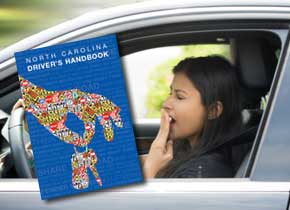
#8. The Driver's Handbook lists tips to prevent drowsy driving. One of these tips is:
Some tips to prevent drowsy driving:
- Get a full night of rest before driving.
- Stop regularly when driving long distances.
- Try to set a limit of 300-400 miles of driving per day.
- Avoid taking medications that cause drowsiness.
- If you are tired and in danger of falling asleep, stop.

#9. Before backing your car, you should do which of the following?
Before entering your vehicle, check behind it for small objects or children. Once you are in the driver’s seat, it is hard to see them
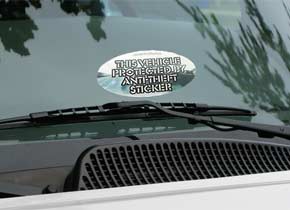
#10. Unauthorized windshield stickers may:
Do not impair your view through the windshield or windows with unauthorized stickers or decals.
North Carolina prohibits stickers and decals on the windshield, except those required by law or approved by commissioner.

#11. You must always obey directions, signals, and instructions from:
II. Truck drivers
Under special circumstances, an officer may be directing the flow of traffic. If so, obey the officer’s hand signals instead of the normal traffic signals or signs. In connection with fires and accidents, you must also obey instructions from firefighters. Near schools, you must also obey instructions from school crossing guards.
Remember, school crossing guards may be considered traffic control officers.

#12. It is a good idea always to increase your following distance when:
II. Following drivers who cannot see you
There are situations where you need more space in front of your vehicle. To be safe, you should increase your following distance on slippery roads, when following motorcycles, when you have a heavy load or are pulling a trailer, when following emergency vehicle or large vehicles, and when approaching railroad crossings.
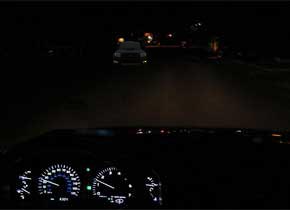
#13. What can you do to alert another driver who does not dim their headlights?
When an approaching vehicle does not dim its headlights, you can remind the driver by blinking your high beams once. If the driver still does not dim the lights, make sure you keep your lights on low beam. Stay on the right side of the road. Do not look directly at oncoming headlights. Instead, look down the right edge of your lane.

#14. When driving in a fog, you should:
Slow down. Use your low beam headlights, not your high beams. Keep a consistent distance between you and the car in front of you. If you are involved in a collision, get your car off the road as quickly as possible.

#15. Which is true about the blind spot to the rear of a tractor-trailer?
II. It may stretch up to 200 feet
Blind spots for the tractor-trailer driver exist up to 20 feet in front of the cab, on either side of the tractor-trailer, particularly alongside the cab, and up to 200 feet in the rear.

#16. If you are underage and convicted of purchasing alcohol, your driver's license:
The law requires a one-year driver’s license revocation upon conviction for any underage person who attempts to purchase or purchases an alcoholic beverage.

#17. A school bus ahead of you in your lane is stopped with red lights flashing. You should:
When a school bus displays its mechanical stop signal or flashing red lights to receive or discharge passengers, the driver of any other vehicle approaching the school bus must stop and not attempt to pass the school bus until the mechanical stop signal is withdrawn, the flashing red lights are turned off and the bus has started to move.
When school bus stops on a divided highway of four lanes or more with a median separation or a center turning lane, only traffic following the bus must stop.
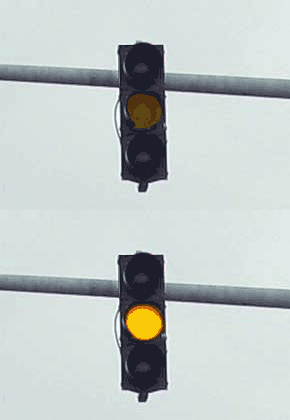
#18. The flashing yellow signal has the same meaning as:
The flashing yellow signal has the same meaning as a warning sign. Slow down and proceed with caution. You do not need to stop for a flashing yellow light, but you must be especially alert before entering the intersection.

#19. This hand signal means:
Left turn – left arm extended horizontally out of an open window .

#20. The percentage of all traffic fatalities that involves alcohol is approximately:
About 38 percent of all traffic fatalities involve alcohol.
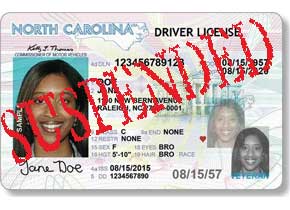
#21. The first time your driver record shows 12 points within a three-year period, you may lose your license for:
If your driver’s license is suspended by the point system, it may be taken for:
- 60 days for the first suspension.
- 6 months for the second suspension.
- 12 months for the third suspension.

#22. When you stop on snowy or icy roads:
You cannot start, stop or maneuver quickly in these conditions. Allow at least three times the normal stopping distance to slow down. When you stop, keep your foot off the brake and let the engine slow the vehicle. Maintain extra distance between yourself and the vehicle in front of you.

#23. You must always stop before railroad tracks when:
II. The crossing is marked with a crossbuck sign
By law, you must stop when:
- There is a stop sign.
- A warning signal tells you a train is approaching.
- A crossing gate is lowered.
- A flag person signals the approach of a train.
- A railroad train emits a signal, indicating that the train is an immediate hazard.
- An approaching railroad train is plainly visible and is in hazardous proximity to such crossing.

#24. A general rule about speed is:
The basic speed law means that you may not drive at a speed that is unreasonable or unwise given the existing conditions.
Conditions often change as you drive. You will drive through different areas such as open country, residential communities, and school zones. Watch for changing conditions and adjust your speed accordingly.

#25. Why can it be dangerous to drive with a leak in the exhaust system?
Check your exhaust system often to be sure it is not leaking. A leak in the exhaust system can allow poisonous carbon monoxide gas to enter the passenger compartment of the vehicle. Carbon monoxide poisoning often can be fatal, and even small amounts can cause you to become sleepy or unconscious and lose control of the vehicle.
| This North Carolina DMV Practice Test | |
|---|---|
| Questions on each test: | 25 |
| Question pool: | 500+ |
| Type of test: | Random multiple-choice |
| North Carolina DMV Written Test | |
|---|---|
| Number of questions on exam: | 25 questions |
| Passing score: | 80 percent |
| Correct answers to pass: | 20 |
| Allotted time to complete test: | No limit |
| Wait time before retest: | 7 days |
North Carolina Practice Tests
This practice test focuses on North Carolina road rules, traffic laws, and safe driving. It has 25 questions and matches the second part of your written knowledge examination for a permit or full driver’s license.
When you apply for a North Carolina driver’s license or learner’s permit, you must pass an examination with two tests.
A road sign identification test.
A written knowledge test about rules and laws.
The first, the road signs test, will check your understanding of common regulatory and warning signs. You must identify 12 signs by color and shape and explain each. You can practice for the road sign identification test here: NC Road Sign Practice Test

The second part of your examination is the tricky one. It has 25 questions about rules and laws with a passing score of 80% (20 correct answers).
The Question Format
The purpose of this practice test is to help you verify your knowledge and level of readiness for the exam. But it also enables you to understand what questions you will likely see on the test and the format used.
Like all DMV tests in the United States, it is a multiple-choice test, mainly with four alternatives.
Nowadays, only one alternative is correct.
Look at these DMV written test answers:
Question 1: Which of the following statements about horns and sirens is/are correct?
- A. Every licensed motor vehicle must have a horn.
- B. Only law enforcement and emergency vehicles may have sirens.
- C. Both A and B.
- D. Neither A nor B.
Question 2: Which of the following statements about horns and sirens is/are correct?
I. Every licensed motor vehicle must have a horn.
II. Only law enforcement and emergency vehicles may have sirens.
- A. I only
- B. II only
- C. Both I and II.
- D. Neither I nor II.
You might not spot the difference immediately, but in the old example (Question 1) C. Both A and B. are the correct and the best choices. But only the last option (D) is incorrect. In other words, a poor test question and, unfortunately, still common in other states.
In the new version of the test (Question 2), you must evaluate two statements. Again, both can be correct, like in this case. But the choices are different. You need to decide if each statement is accurate or not. You have one option that says that only the first statement is correct, one that says that only the second one is correct, and one that says that both are correct or incorrect.
Not two answers can be correct in this version.
Expect at least a handful of questions in this format on your test.

How to Study for the Test
Always start by getting the latest version of the Driver Handbook. Get it from your nearest DMV office or download from ncdot.gov .
Use the handbook to learn all the facts for your driver’s examination. North Carolina draws everything on your test from this handbook.
Be prepared for questions about laws and what will happen if you break the law, especially the consequences for Driving While Impaired (DWI). North Carolina DMV also emphasizes safely sharing the road with pedestrians, bicyclists, and other vehicles.
You will likely pass the test with a good understanding of the handbook’s contents.
The person who will be your supervising driver should also read the handbook to reinforce safe and defensive driving techniques.
Use the practice test as a supplement to the handbook, not instead of it. Practice tests work best if you use them together with the guide.
DMV draws every question on the North Carolina test from the North Carolina Driver Handbook issued by North Carolina DMV. To prepare for the examination, you should always read the handbook.
Read more: Drivers Prep Help You Ace your Learners Permit Test .

How Long Should You Study for the DMV Test?
A general recommendation is to study at least two weeks before the examination.
Try to read only some chapters at a time. The more you spread your study sessions, the better your long-term recollection of facts. After all, you want this knowledge to stick. Not knowing some basic traffic rules can have serious consequences when you hit the road.
While last-minute cramming can help you pass a test, you will only remember the material briefly. It doesn’t make you a good driver.
Let’s say it will take you about 20 hours to learn everything you need to know. With 20 hours, it is better to study 2 hours every second day over three weeks than 20 hours in a few days.
Mixing is also a recommended study tactic. Read the handbook, take practice tests, and talk about driving rules. If you are taking a driving class, engage in the discussions and be active. Find someone you can discuss traffic rules with. It will help you more than you think.
What You Must Know about the North Carolina DMV Test
It is a closed-book test, and you cannot use books, papers, or electronic devices when taking the test.
North Carolina DMV does not offer online tests from home; you must take your knowledge examination at a DMV office. Appointments are currently mandatory.
The passing score on the North Carolina DMV rules test is 80%. You must correctly answer 20 of the 25 questions.
If you fail your first attempt, you must wait at least seven days before retesting. There is no fee for retesting.
The test has no time limit, so you have plenty of time to read all questions and answers carefully and avoid unnecessary mistakes.
The test is available in additional languages, including Chinese, Japanese, Korean, and Spanish. If you have trouble understanding English, let someone help you to ensure you can get a test in your language.
If you have difficulty reading, DMV may offer an oral test. Make sure you contact your local DMV office in advance.
Who Must Pass the North Carolina DMV Written Test?
First-time Applicants
All first-time applicants must pass a written knowledge test for an original NC learner’s permit or driver’s license.
Drivers who let their license expire more than one year.
Drivers who had their license revoked.
If DMV revokes your license, you must wait until the revocation period ends before re-applying for a North Carolina driver’s license. You must pass all tests again before DMV issues a new license.
Drivers with a foreign driver’s license.
Drivers who move to North Carolina and hold a license from a country other than the United States or Canada must pass the knowledge test as part of the application process.

Is the North Carolina DMV Written Test Hard?
North Carolina DMV does not record or release failure rates on the knowledge test. Experts suggest that more than one-third fail the written exam, making the difficulty level on the exam “moderate.”
Most applicants, however, pass the road sign identification test, which is generally considered easy.
Study and Learn More


Visit Your NCDMV Office

Go early. Early morning and early afternoons are the least busy.
Lunchtime visit? Not so good.
Mid-week is better than Mondays and Fridays.
Avoid the last day of the month.
Remember to bring the correct documents for what you need to do.


This helped a lot. thank you for sharing.